

If a repair touches your windshield, your front bumper, a side mirror or your rear bumper, assume a driver-assistance sensor was disturbed until someone proves otherwise. Those are the places the cameras and radar units live on most newer cars, and they're the same places a collision tends to land. Recalibration is how the shop proves the sensors are reading the road correctly again.
We've written before about how ADAS calibration works, the targets, the scans and the reasons behind them. This post is the practical companion to that one. It covers which repairs should trigger a recalibration, what you should see on the paperwork, and what to ask before you take the car home.
Which repairs usually call for recalibration?
Start with the windshield. The forward-facing camera that reads lane markings sits up near the mirror on most cars that have one, so new glass means the camera has to be re-aimed. We recalibrate any sensors tied to a windshield we replace, and it's written into how we handle glass on every brand we repair.
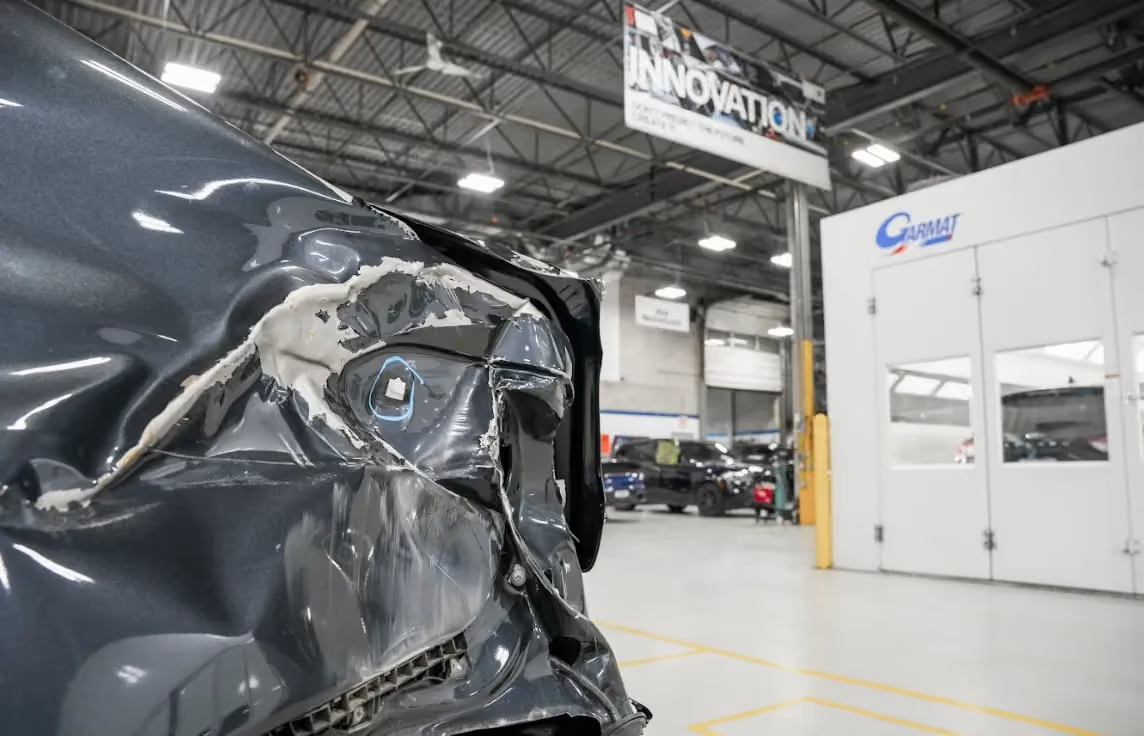
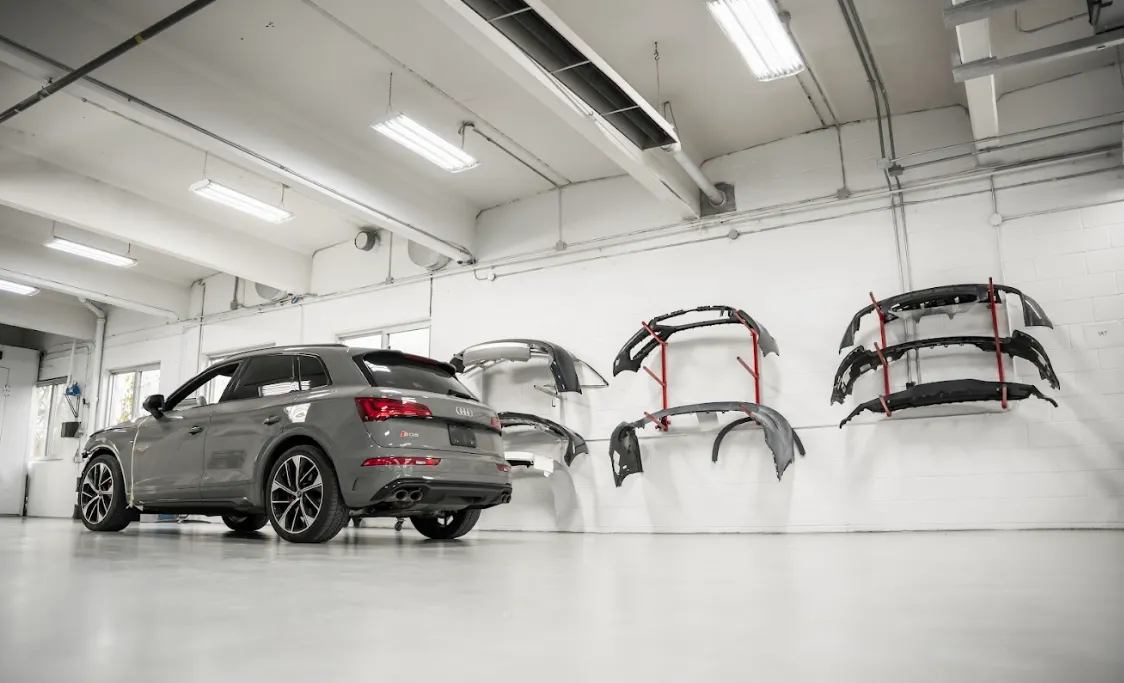
The front bumper and grille come next. Radar for adaptive cruise and automatic emergency braking usually sits behind the bumper cover or the emblem, and a front-end hit can shift the bracket even when the cover only shows a scuff. Our post on bumper damage that isn't cosmetic goes into what sits behind that plastic.
Side mirrors often carry the cameras for surround view and sometimes blind-spot hardware. Rear bumper corners commonly hide the blind-spot and rear cross-traffic radar. And on a lot of newer cars, a wheel alignment or suspension repair after a collision changes the steering angle and thrust line the systems use as a reference, so some manufacturers call for a calibration after that work too. The exact list depends on the make and the options on your car, which is why the shop has to check the manufacturer's procedure for your specific vehicle instead of working from memory.
What should the paperwork show?
Every calibration should show up on your repair documents as its own line, tied to the sensor it covers. If the estimate lists a new windshield and nothing about the camera behind it, ask. If the front bumper was replaced on a car with adaptive cruise and there's no radar calibration listed, ask.
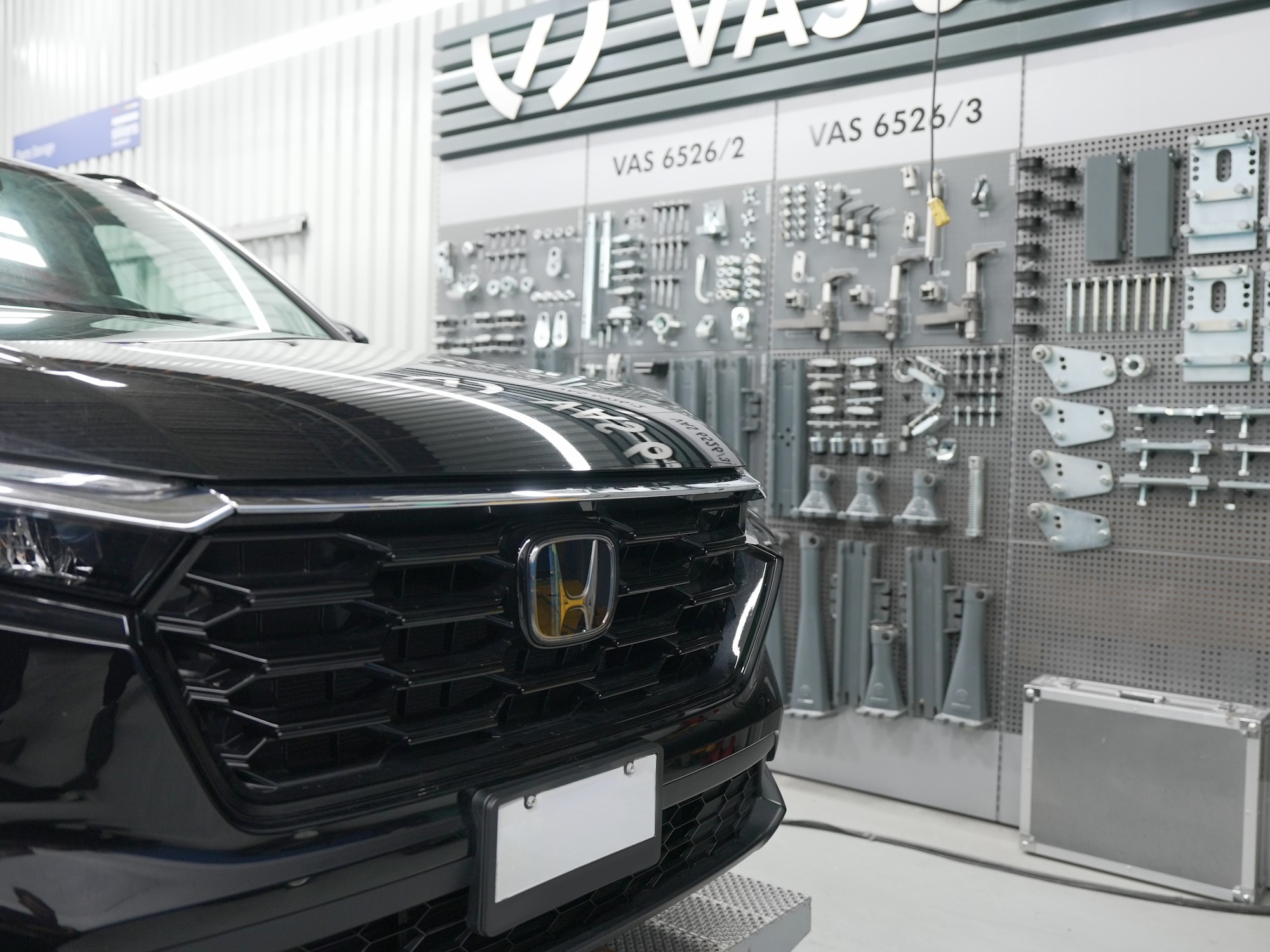
A pre-repair and post-repair scan should be on there as well. The scan reads the car's control modules and shows whether the systems are reporting faults before the work starts and whether they're clean when it's done. Our facility runs six vehicle scanning systems for diagnostics and calibration, so this work happens in our building instead of being sent out and coming back with a note.
Static or dynamic, and why it matters to you
Calibrations come in two broad kinds. A static calibration happens in the shop, with the car on a level floor and targets set at measured distances and heights in front of it. A dynamic calibration happens on the road, driving under the conditions the manufacturer specifies until the system confirms it's aligned. Many cars need one, some need both, and the procedure decides which.
That affects your timeline. A static calibration needs floor space, targets and time set aside in the shop. A dynamic one needs the right road and the right conditions. When we give you a finish date on a car with driver-assistance features, the calibration is part of that date from the start, so it isn't a surprise on pickup day.
Does the brand change anything?
The principle is the same on every car, and the procedure is not. Each manufacturer publishes its own calibration steps, targets and conditions, and certified shops work from those. On our Mercedes-Benz certification page, for example, we spell out that ADAS recalibration is checked after glass work and part of collision-related mechanical repairs, and the same discipline runs across the brands we're certified for, from Tesla to Audi to Honda.
Questions we hear a lot
My dashboard shows no warning lights. Am I fine?
Not necessarily. A sensor can be aimed slightly off without throwing a fault, because it's still working, just looking in the wrong place. A clean dash is a good sign, and it still doesn't replace the calibration the manufacturer calls for after the repair.
Can I drive the car before it's calibrated?
The car will usually drive, but the driver-assistance features may not behave the way you expect, and some will switch themselves off. If a shop hands the car back and tells you the calibration can wait, get that in writing and get it booked.
Does insurance cover the calibration?
When the calibration is required because of the collision repair, it's normally part of the repair, and it should be on the estimate your insurer reviews. Confirm the specifics of your claim with your adjuster or broker.
If your car has driver-assistance features and it's been in a collision, book an estimate or call us at 416-259-6344. Bring any paperwork from earlier repairs, because the first thing we'll check is whether the sensors were calibrated the last time.
This article is general information, not insurance advice. For how your claim is handled, confirm the details with your insurer or licensed broker.