

You tap a pillar in a parking garage, or someone nudges you at a light, and the bumper comes away with a scuff and maybe a small crack. It's tempting to write it off as cosmetic and move on. On an older car with a simple bumper, that might be fair. On a modern vehicle, the cover you can see is the least important part of what's there, and a scuff can sit on top of damage that matters for your safety, your insurance claim, and what the car is worth later.
What's behind the cover
The painted plastic bumper cover is the outer skin. Behind it sits a layered system designed to manage an impact and, increasingly, to house technology. There's usually an energy absorber, often foam or a formed structure, meant to soak up a low-speed hit. Behind that is the reinforcement bar, the rebar, that ties into the vehicle's structure. And tucked into and around all of it on most newer cars are sensors: parking sensors, the radar for adaptive cruise and automatic emergency braking, sometimes cameras. The cover's job is partly to look right and partly to hide and protect that hardware.
That layered design is why bumper repair on a modern car is a different job than it was fifteen years ago. The visible plastic is the cheapest part of the system. The parts that do the work in a collision, and the parts that watch the road for you, all live behind it.
Why a small scuff can mean more
Because of that hardware, the visible damage and the underlying damage don't always match. A bumper can look barely marked while the absorber behind it is crushed, the rebar is bent, a mounting tab is broken, or a sensor has been knocked out of position. The reverse happens too, where an ugly-looking scuff turns out to be purely surface. The only way to know which situation you're in is to look behind the cover, and that's not something you can judge from the driver's seat.
A crushed absorber that isn't replaced won't protect you the way it should in the next hit. A sensor knocked askew can feed a safety system bad information, the problem we cover in our note on ADAS calibration after a collision. Neither of those shows up in a walk-around in your driveway.
How a proper bumper inspection works
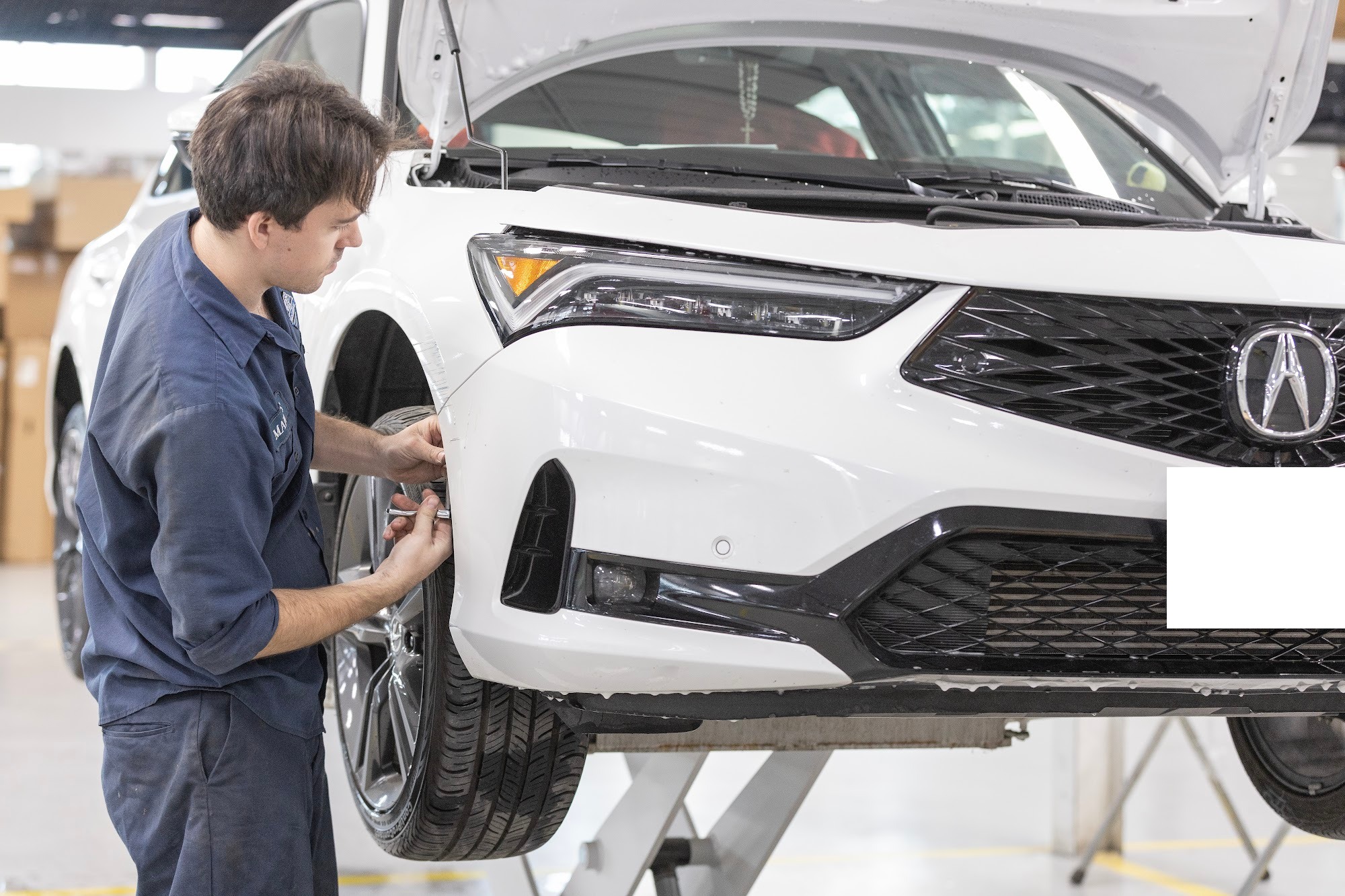
When a car comes to us after a low-speed hit, the inspection starts with the areas the impact loaded: the cover, the mounts, and the panels beside it. On a late-model vehicle it usually includes a diagnostic scan, because the car's own systems will often report a disturbed sensor before anything looks wrong. If what we find says the damage stops at the cover, that's the honest answer and a small repair. If the absorber or reinforcement took the hit, you'll see it documented with photos before any work is approved. Our repair process page walks through how that documentation and approval works, and our auto body repair page covers the repair side itself.
Why a buff-and-go can cost you
A quick fix that buffs the scuff or fills the crack and sends you on your way deals with the part that doesn't matter and ignores the parts that do. On a car with sensors and a structural reinforcement behind the bumper, that's a gamble with both safety and money, because hidden damage that goes unaddressed tends to surface later as a bigger problem, and by then it's harder to tie to the original impact for a claim. On a leased or newer vehicle it can also cost you at inspection time, since a repair that didn't restore the car to standard gets flagged the same way the damage would have been. A repair done to the manufacturer's standard, the kind a certified shop is required to do, closes the question instead of deferring it.
Common questions after a bumper hit
Should I claim a minor bumper hit through insurance? It depends on the repair cost against your deductible, and that's exactly why the inspection comes first. If the damage stops at the cover, the repair may sit near your deductible and paying directly can be simpler. If there's absorber or reinforcement damage underneath, the number changes, and so does that decision. Get the real scope before you decide, and talk to your broker about how a claim affects your policy.
Can you just replace the cover? Sometimes, and when that's the honest scope, it's what we do. The cover only gets replaced alone when what's behind it checked out. That check is the point.
My car has parking sensors and cruise assist. Do they need recalibration after a bumper repair? If the work disturbed them, yes, and on most modern cars bumper work does. Recalibration to the manufacturer's procedure is part of the repair at our shop, not an add-on you have to ask for.
A scuffed bumper might be nothing. It also might be hiding a crushed absorber or a displaced sensor, and the difference matters for how the car protects you next time. If you've had even a low-speed hit on a modern vehicle anywhere in the GTA, book a quick inspection or get in touch, and we'll check what's behind the cover before you decide it was only cosmetic.