

A Tesla approved body shop is a repair centre Tesla has vetted to repair its vehicles to factory standard, with technicians trained and certified by Tesla, genuine Tesla parts, and access to the company's current repair procedures. Any shop can take in a damaged Tesla. Only an approved shop gets the documentation, the parts, and the direct line to Tesla's engineers that a proper repair depends on.
Drivers usually search for a Tesla certified body shop, while Tesla itself calls the program approval, and both phrases point at the same thing, a shop the manufacturer has vetted to repair its cars. CSN 427 Auto Collision holds that approval at our Etobicoke facility, and the scope of it is laid out on our Tesla certification page. This post covers what the approval requires and what it changes once your car is in the shop.
What does Tesla approval require?
It starts with people. Our team is Tesla-accredited and certified, which is what gives us access to Tesla's current repair procedures and the training that goes with them, and we work on every model Tesla makes. The training doesn't sit still either. Tesla updates its repair procedures as the cars change, approved shops work from the current versions, and when a procedure leaves room for doubt we have direct access to Tesla's engineers for guidance. That last part matters more than it sounds. On a car this integrated, a phone call to the people who designed it beats an educated guess every time.
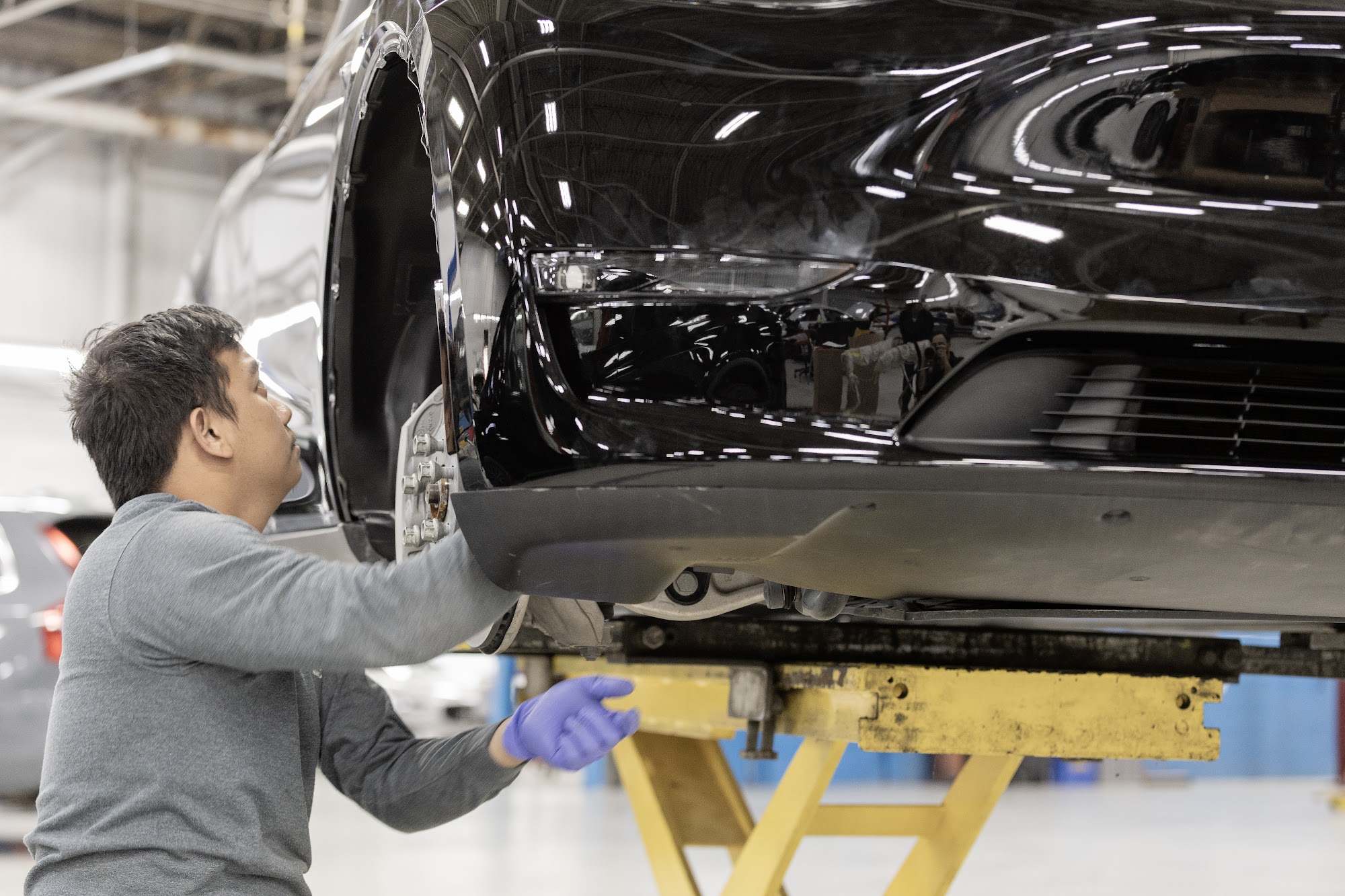
Parts and equipment are the other half. We use original Tesla parts and equipment designed and tested to Tesla's standards, which sounds bureaucratic until you watch a structural repair up close. A bench that measures to the wrong datum or a rivet gun set at the wrong pressure will produce a repair that looks fine and isn't. Tesla approves the equipment because the cars were engineered around specific materials and joining methods, and the repair has to match them.
The repair itself runs through a documented sequence, from assessment and disassembly through bodywork, paint, and reassembly to a final inspection before delivery. Nothing gets signed off until that last check is done.
Why does structural aluminum change the repair?
Tesla builds with a lot of aluminum alongside very high-strength steel, and aluminum doesn't behave like the steel most collision work grew up on. It has no useful memory once it bends, so a damaged structural section is typically replaced to a documented procedure rather than pulled back into shape, and the joining relies on rivets and structural adhesive where a steel car would be welded. Getting that right takes training on the specific material, which is why our technicians are factory certified on both aluminum and high-strength steel.
Aluminum also can't share a workspace with steel. Steel dust that settles into bare aluminum will start corrosion under the finished paint months later, so aluminum work here happens in a self-contained repair area with its own dedicated tools, inside our 100,000 square foot facility. We measure structural repairs with a Car-O-Tronic measuring system and vision software, since crash structures only protect you when the geometry underneath is back to spec. We've gone deeper on all of this in our post on aluminum body repairs if you want the material science.
What happens with the high-voltage system and the software?
A Tesla carries a high-voltage battery system, and Tesla's repair procedures cover how to work around it safely, including powering it down when the work calls for it. Following those documents to the letter is a condition of the approval, and it's also basic safety for the people doing the work. Batteries themselves are a subject we've covered separately in our post on handling and recycling EV batteries, so we'll leave the depth there.
Then there's the software. A Tesla in our shop gets a diagnostic scan at assessment and a final inspection before delivery, with the systems the car relies on checked and calibrated to Tesla's spec in between. Our facility runs six scanning systems for diagnostics and calibration, so that work happens in-house rather than at a third party. Sensor calibration deserves its own article, so we're keeping this short, but no Tesla leaves here without its electronics verified.
How is approval different from a shop that says it does Teslas?
The honest answer is access. A general shop can do respectable cosmetic work on a Tesla. On structural or electrical work the gap opens fast, because Tesla's procedures, parts channel, and engineering support aren't available outside the program. The approved shop follows the manufacturer's instructions with the manufacturer's parts and can ask Tesla directly when something is unclear. The general shop is improvising with good intentions, and on a car this integrated, improvising is where problems start.
Approval also carries obligations the sign out front doesn't show. We follow Tesla's repair procedures in part because that's what protects the owner's manufacturer warranty, and it's the same discipline behind the certifications we hold from more than a dozen other manufacturers after fifty-plus years of collision work. We've written about what manufacturer certified means in general terms, and the pattern is consistent across brands. The manufacturer defines the repair and the certified shop carries it out. Tesla calls its standards rigorous, and after going through the program, we wouldn't argue.
Questions we hear a lot
Will a collision repair void my Tesla warranty?
This worry sits behind a lot of the calls we get. We follow Tesla's repair procedures specifically so the manufacturer warranty stays protected, and we use original Tesla parts and approved equipment throughout. If a shop can't tell you which procedures it followed, ask about that before the work starts, whoever ends up doing your repair.
My insurer suggested a different shop. Do I have to go there?
We work with insurance partners across Toronto and the GTA and handle Tesla claims with them regularly, so a suggestion from your insurer isn't the end of the conversation. We've laid out how shop choice works in Ontario in a separate post worth reading before you decide anything.
Do you repair all Tesla models?
Yes, every model Tesla makes. The repair plan is built around the type and extent of the damage on your specific car rather than a standard package, which is how the factory procedures are written to be used.
If your Tesla needs work this fall, get it assessed before winter driving adds its own stresses to a car that's already been hit. Book online or call 416-259-6344, and we'll take it from the first assessment through to final inspection at 395 Evans Avenue in Etobicoke.
This article is general information, not insurance or warranty advice. For how a claim or your coverage applies to your situation, confirm the details with your insurer or licensed broker.