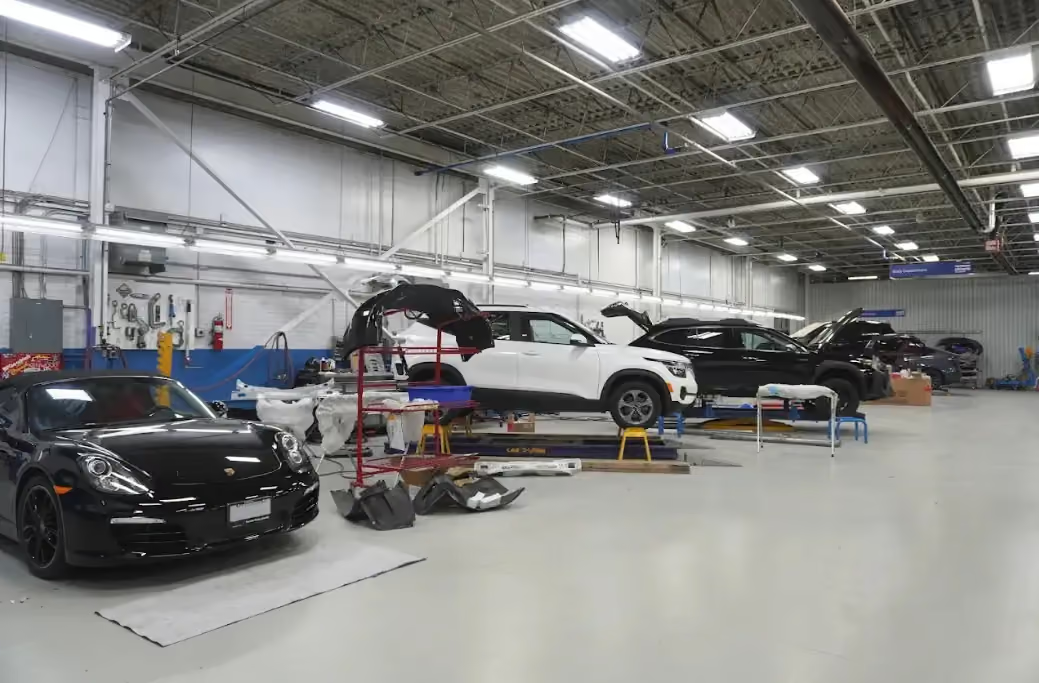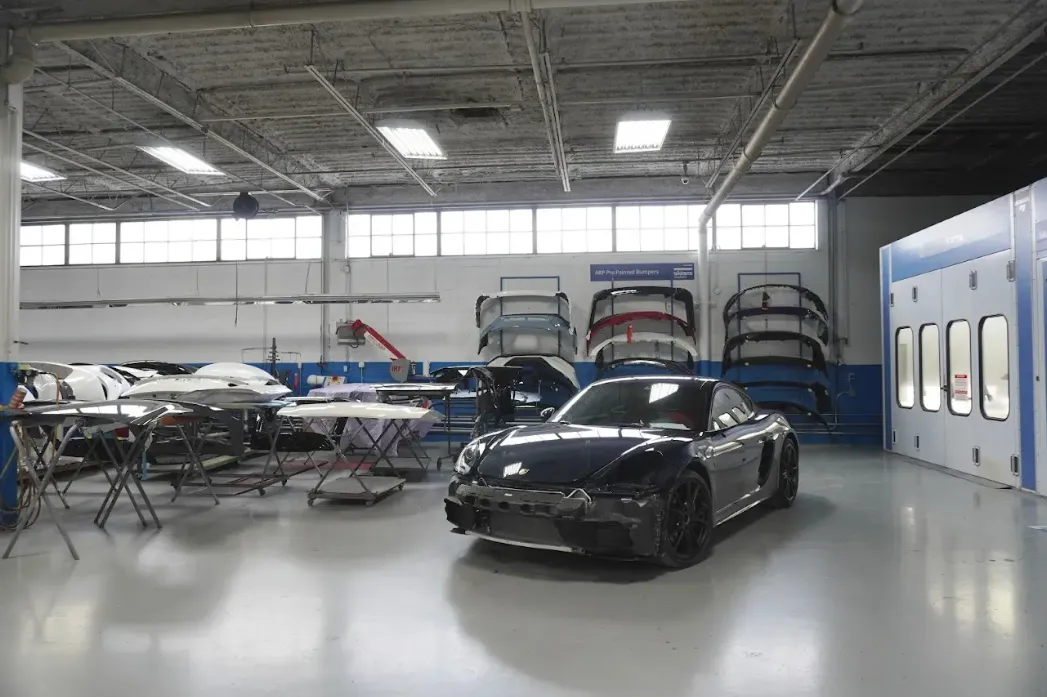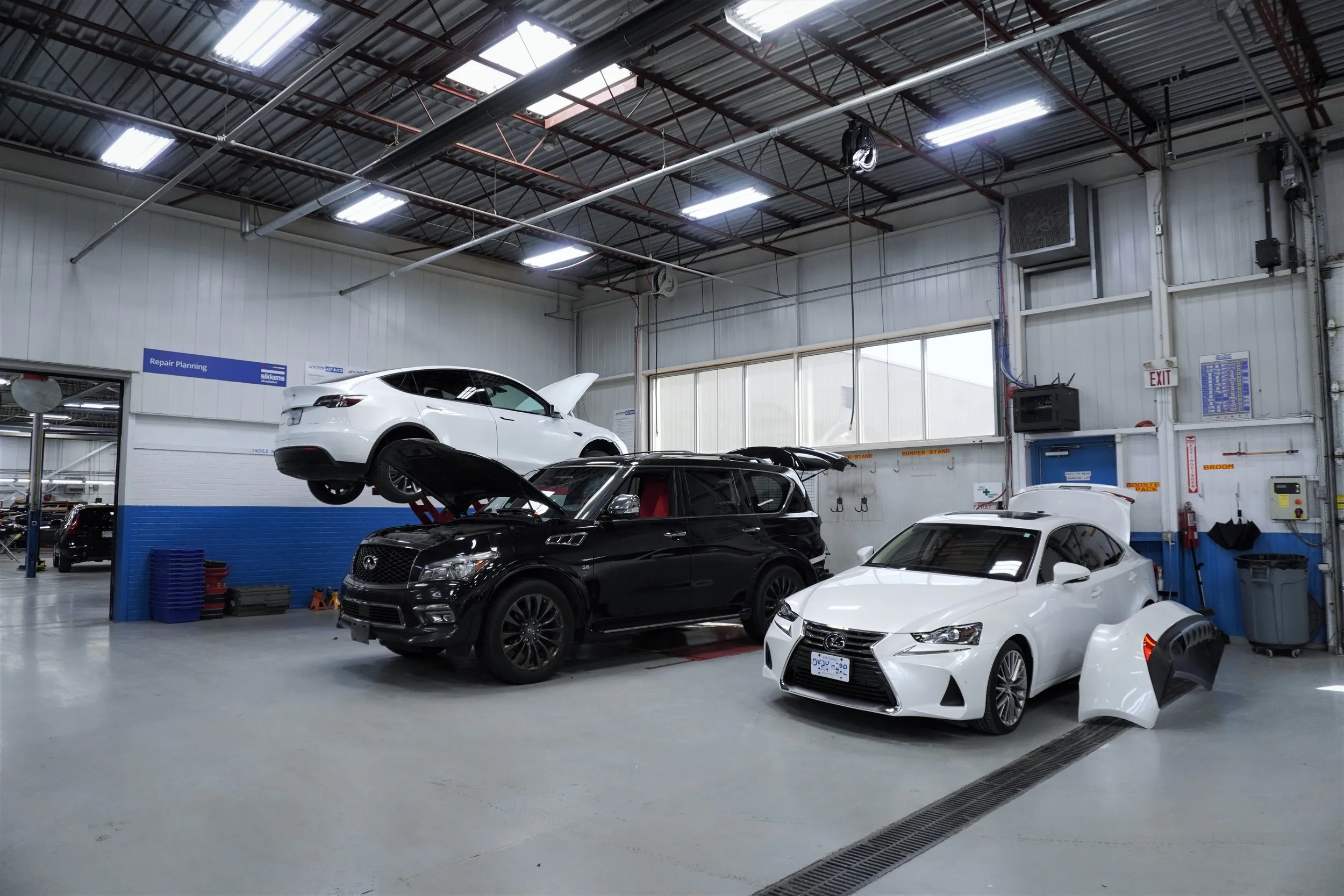


When a shop tells you your car is "in repair planning," it means the vehicle is being partially disassembled around the damage so every affected part can be found, documented, and priced before repair work begins. Nothing is being fixed yet, and that's deliberate. That planning stretch, usually the first day or two, is what keeps the rest of the repair from stalling.
The phrase throws people, and the question reaches our front desk in the same form every week: the car has been with you for two days, why hasn't anyone started fixing it? Fair question. From the parking lot, planning looks like nothing is happening. Inside the shop, it's the busiest stretch of the whole job.
Why we take your car apart before we fix anything
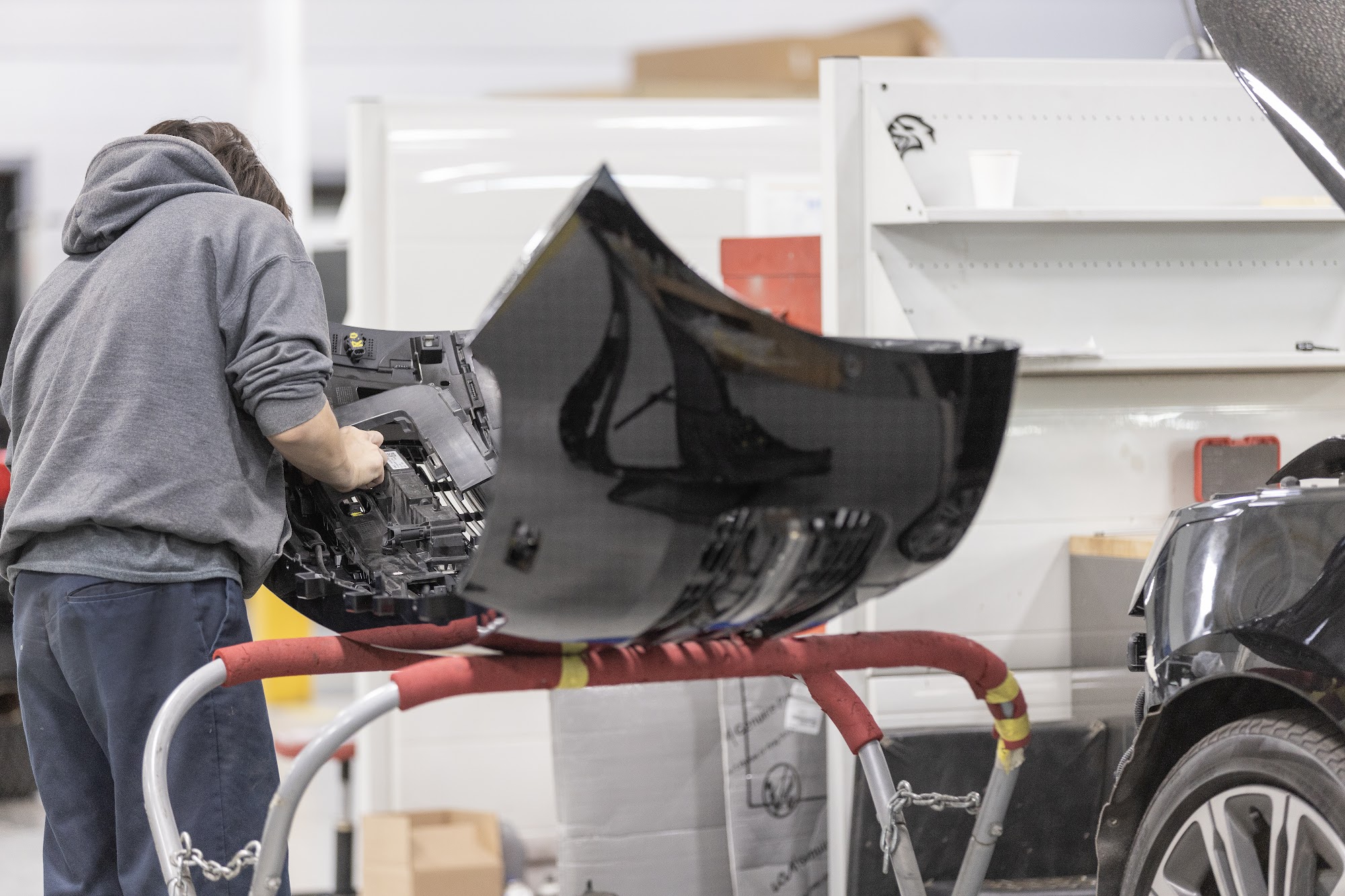
The estimate written at intake is based on what's visible, because that's all anyone can honestly price on day one. A modern bumper cover is plastic trim. The pieces that matter in a crash, energy absorbers, brackets, wiring, and on most newer vehicles a row of sensors, sit behind it, and none of them can be inspected until the cover comes off.
So the first working step in our collision repair process is disassembly. Technicians remove the damaged panels and trim around the impact area while the estimator maps everything the collision touched. The trade calls this blueprinting, and the name fits. We're drawing the complete plan for the repair before anyone picks up a tool. Our estimating team has been writing repair plans for over 30 years, on everything from daily commuters to some of the most unusual luxury vehicles on the road. If you want the full arc from drop-off to delivery, our process page walks through all five stages.
Why does the estimate change after drop-off?
Once disassembly starts, the picture usually grows. A rear-end hit that looked like a bumper and a tailgate may also have pushed the impact bar into the body or cracked the mounts behind a taillight. Low-speed damage hides well too. A curb taken at parking speed can bend suspension parts that show no outside damage at all. Estimators call this hidden damage, and finding all of it at once is the whole point of the planning stage.
When we find damage that wasn't on the original estimate, we photograph it, document it, and send your insurer what's called a supplement. A supplement is the updated repair plan with the added damage priced out, and on an insured claim the insurer reviews it before we proceed. We work with major insurance companies every day and handle that back-and-forth directly, so you aren't stuck relaying messages between an adjuster and a shop. Our guide to insurance claims for auto body damage covers the claim side in more detail.
Why order parts before repairs start?
A finished blueprint tells us every part the job needs, down to the one-time-use clips and fasteners that get destroyed on removal. We order all of it before body work begins, because the alternative is finding out about a back-ordered panel in week two while your car sits half-assembled on a rack. A slow part discovered on day two is a scheduling note. The same part discovered on day twelve is a stalled repair.
Planning is also where certification shows up in practice. Manufacturers publish repair procedures for their vehicles, and those procedures spell out the parts and methods a given repair requires. On the brands we're certified for, Mercedes-Benz among them, following that file is a condition of keeping the certification, and it starts in planning, before a single panel is straightened. That's a big part of what being manufacturer certified means. The same discipline runs through our dedicated truck and van facility, where the vehicles are bigger and a stalled repair usually means a business losing money by the day.
How does two days of planning shorten the repair?
It sounds backwards, but a thorough plan is the shortest path through a collision repair. One complete supplement gets reviewed once, instead of three partial ones that each pause the job while an insurer looks them over. Parts are on the shelf when body work begins, so technicians go straight through instead of stopping mid-job to wait. And the paint, reassembly, and final checks that follow are working from a complete picture rather than chasing surprises.
A stalled repair doesn't just wait, it loses its spot. Shop schedules stay full, and a job that pauses midway rejoins the line behind everyone who arrived while it sat. We've been repairing collision damage for more than 50 years, and planning is the one stage we refuse to rush. Two careful days at the start are cheaper than two idle weeks in the middle.
Questions we hear a lot
Can I keep driving my car while parts are on order?
Sometimes. If the vehicle is safe and legal to drive and disassembly hasn't started, talk to us about scheduling the repair for when the parts arrive. Once the car is opened up, it stays with us until it goes back together. If it isn't drivable, there are rental companies right at our facility to get you into a replacement quickly.
Do I have to approve the supplement?
On an insured claim, the supplement goes to your insurer for review, and we back it with photos so the added damage is plain to see. If you're paying out of pocket, the updated plan comes to you instead, and nothing beyond it gets repaired without your go-ahead.
What should I do before drop-off?
Clear out your personal belongings, bring your claim number and adjuster details if an insurer is involved, and sort out how you'll get around while the car is with us. We keep a short appointment checklist that covers all of it, and it saves the phone call on day two about the garage remote you left on the visor.
Summer damage doesn't get cheaper to plan in October. Book your drop-off online and we'll put those first 48 hours to work.
This article is general information, not insurance advice. For how estimates, supplements, and approvals work under your policy, confirm the details with your insurer or broker.