

When a body shop tells you your car is "in paint", the bodywork is finished and the car has moved into the paint department. This is where car paint repair in Toronto gets decided panel by panel: the colour, the gloss, how far the new paint has to reach so nobody can find the repair, and which finishes need a different plan altogether.
Our founder, Ralph D'Alessandro, was the first to use AkzoNobel auto paint in Canada, and AkzoNobel has been our main paint supplier for over 25 years. CSN 427 Auto has been named North American Body Shop of the Year three times, and the paint department works in the same 100,000 square foot facility at 395 Evans Avenue as the rest of the repair.
What does it mean when my car is "in paint"?
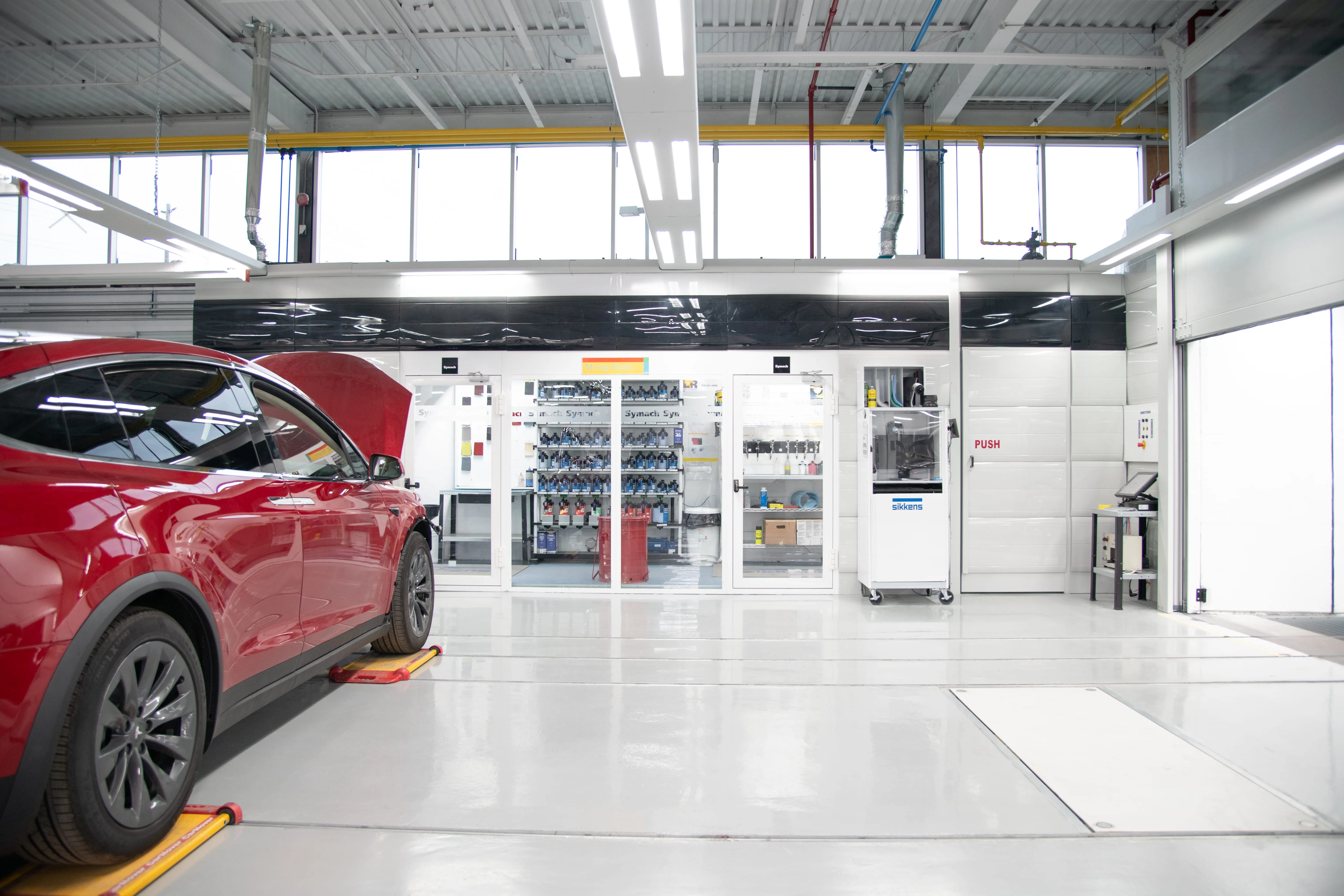
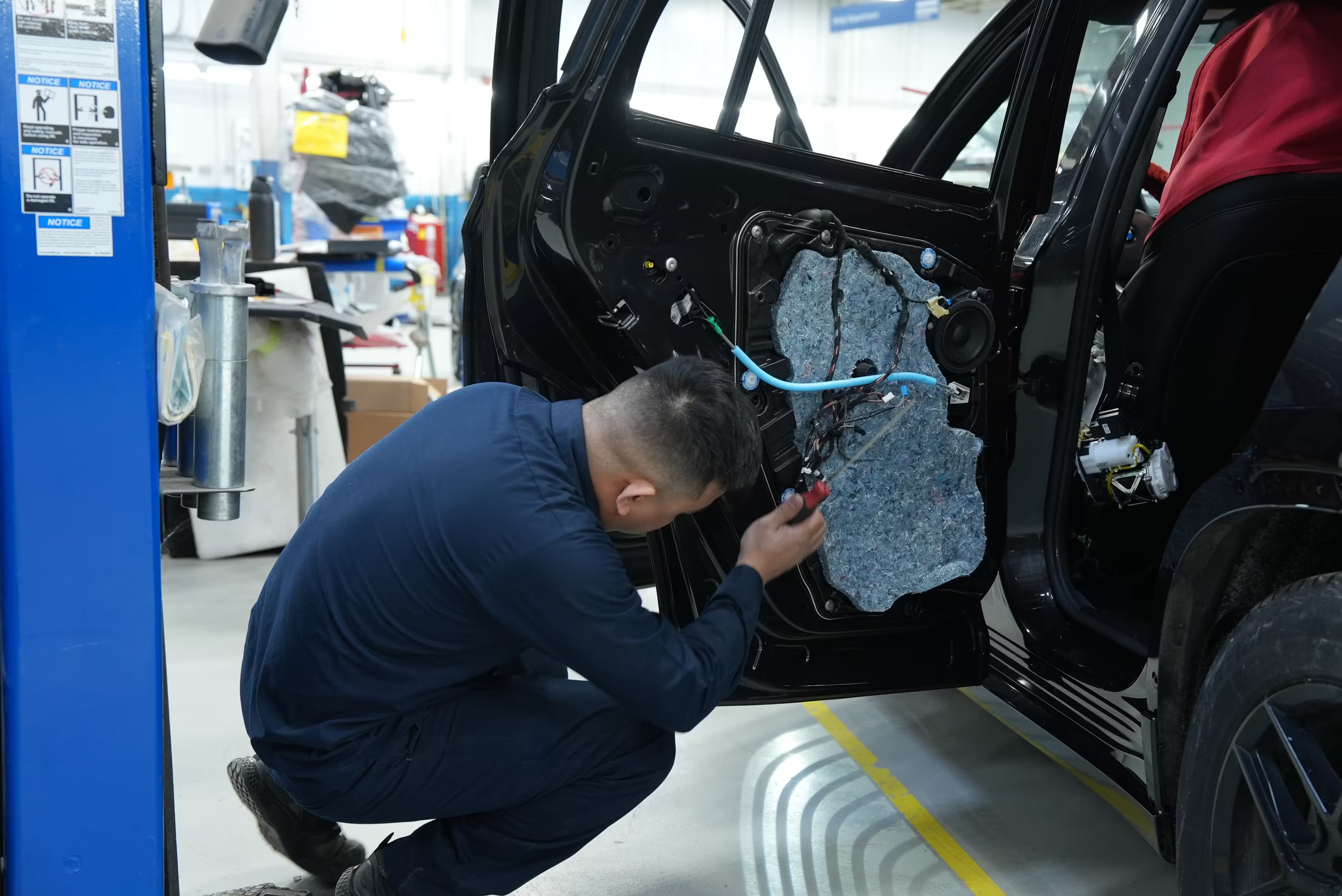
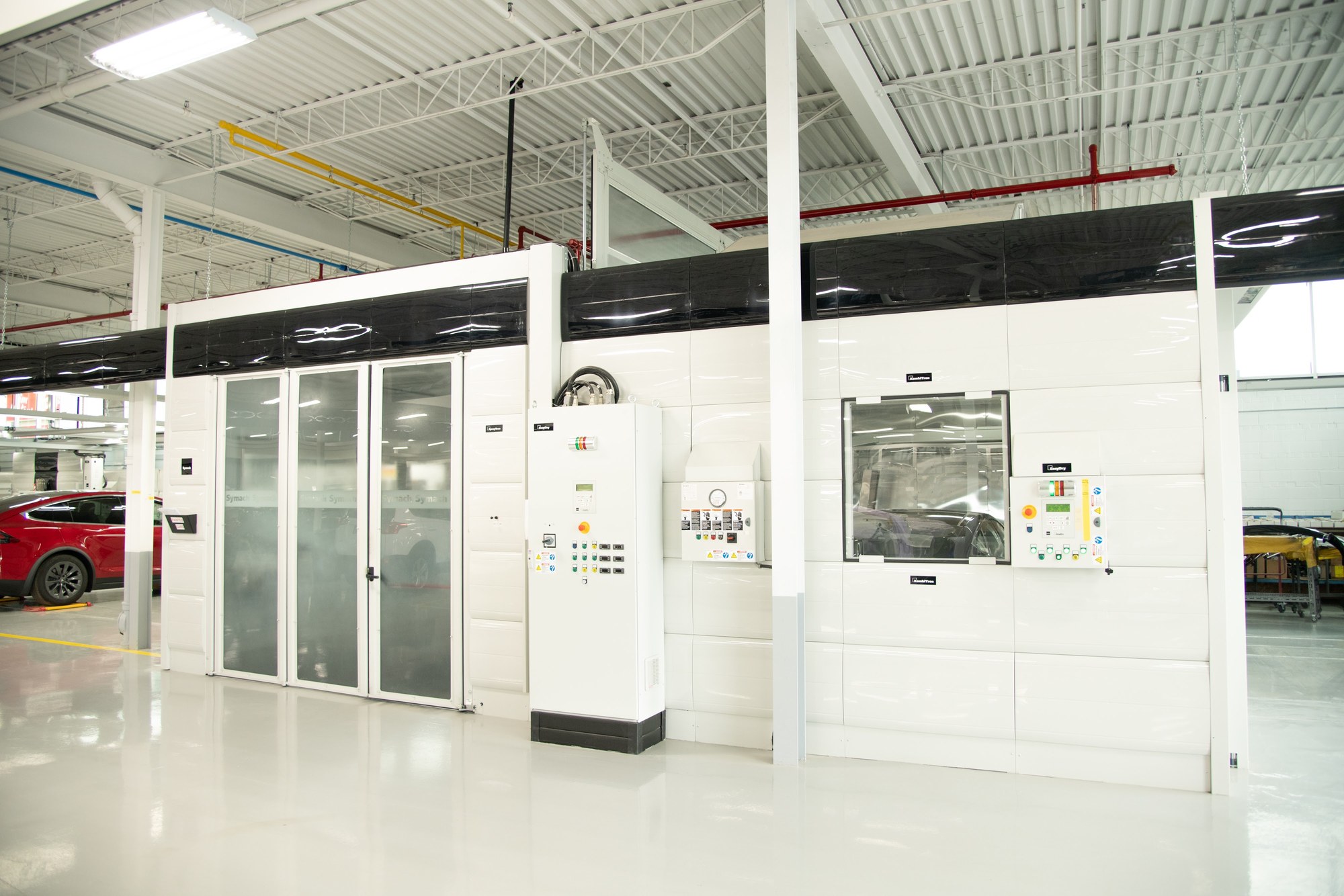
It means the structure and panels are repaired and the car is being refinished before it goes back together. Bumpers, mouldings, lamps and trim usually stay off at this stage so the paint can reach every edge. The car moves through our prep stations first and then into a spray booth, and the new finish dries and cures before reassembly. Our facility has 18 prep stations, six downdraft spray booths, a Symach KombiTron dual chamber booth, and two custom-sized Symach booths built for trucks and vans. That many booths matters, because the booth is where most body shops get backed up.
What happens before any colour goes on?
Most of the time a car spends in paint is preparation. The repaired area is sanded smooth and feathered into the paint around it, and any panel that will be blended is scuffed so the new basecoat and clear can grip it. Primer goes on, dries and is sanded, often more than once, until the panel follows the body's original contours with a completely smooth surface. Getting that contour right takes a trained eye, and it is slow on purpose. Any wave left in the primer shows through the colour later.
The panel is then sealed and masked, and the car goes into the booth. A downdraft booth pulls air from the ceiling down through the floor, carrying dust and overspray away from the panel being painted.
How do body shops match paint?
It starts with the car itself. The paint code is only a starting point. Our painters use AkzoNobel's Automatchic paint matching tool to find the closest formula for the car's colour, and the formula is tinted when the car needs it. I-CAR, the collision industry's training organization, says colour matching is done on every vehicle that comes into a collision shop, including black ones. A car that has spent five years parked on Toronto streets is rarely the exact shade it was when new. The mixing and tinting side is covered in our post on colour matching for complex factory paints.
Why is a panel that wasn't damaged on the paint list?
Because of the blend. If the rear door is repaired and painted, the colour usually has to be carried into part of the front door and the quarter panel too, so the whole side of the car reads as one colour. I-CAR describes blending as extending the basecoat into the adjacent panel so some of the original colour shows through the new paint. It also says blending can never take the place of tinting, which is why the formula work comes first.
Clearcoat follows its own rule. Paint makers and most manufacturers want the clear taken out to a panel edge. For its refinish warranty, AkzoNobel wants the clear taken back to the nearest breakpoint, which its representative at a 2025 Collision Industry Conference session defined as a 180-degree panel edge. That is why blend panels show up on an estimate next to the panel that was damaged.
What changes with metallic and pearl paint?
Metallic paint carries aluminium flakes and pearl paint carries mica, and both look different depending on how those particles lie in the film. A painter controls that with technique. I-CAR describes a light final mist, called a drop coat or orientation coat, used on metallics and pearls so the flakes settle the same way as the factory finish. Spray the panel a little wetter or drier and the colour can match head-on and still look darker or lighter from an angle.
Many pearl whites and some reds are three-stage colours, and the number of midcoat passes changes the shade, so paint makers' three-stage procedures start with a let-down panel that shows how many midcoats it takes to match the car. Those colours also need room for a longer blend. Our paint refinishing page puts it this way: base coat and clear coat go on in three or four stages, depending on the colour and finish of the car.
Why can't matte paint be polished or blended?
Matte is the finish that breaks the usual rules. Its clearcoat dries with a texture that scatters light, and that texture is the look. Polishing would flatten it and leave a shiny patch. Mercedes-Benz owner's manuals tell drivers of matte-finish cars never to polish the car and never to use wax or polishing products, because they cause shiny, mottled areas. An AkzoNobel Sikkens bulletin on matte care says that once an area turns glossy, the only fix is to repaint it.
That changes the repair plan. I-CAR notes that matte cannot be blended or buffed, so a larger area may need refinishing, and minor defects like a dirt nib cannot be polished out afterward. At a 2024 Collision Industry Conference panel on matte clears, BASF's presenter said the adjustment a matte repair usually needs is to the sheen, and the colour is rarely the problem. The panel's advice was to spray several test panels, record the gun, tip size, clearcoat, hardener and bake settings for each, and check them with a gloss meter, which picks up differences the eye misses. All of the presenters agreed there is only one chance to do each matte refinish correctly, which is why booth cleanliness comes first.
What happens after the paint goes on?
The finish cures before anyone handles it. On gloss paint, any small dust marks are worked out, and the panels are buffed and polished so the repaired areas carry the same gloss as the rest of the car. Matte panels skip that step entirely.
Then the car goes back together. On newer cars, the bumper covers are also where radar sensors sit, and the paint on those covers has limits of its own. GM, for example, caps the total paint thickness on repaired bumper covers with driver-assistance sensors behind them and requires it to be checked with a mil gauge. Every sensor and camera the repair affects is calibrated before the car is handed back, which our post on ADAS calibration after a collision explains. The last step is a final inspection by our technician.
Questions we hear about the paint department
Can a scratch on matte paint be touched up?
Not with a touch-up pen or a polish. Anything glossy sitting in the scratch will catch the light, and rubbing the area makes it shinier. A damaged matte panel gets refinished, with the sheen matched on test panels before the car is painted.
Why do some cars spend longer in paint than others?
The colour often sets the pace. A three-stage pearl needs a let-down panel and extra midcoats, a matte finish needs test panels to get the sheen right, and a wider blend adds panels to the job.
Do you paint trucks and vans?
Yes. Our two Symach booths for larger vehicles have extra height and length, and our 13,000 square foot truck shop handles full refinishing for commercial vans and light-duty trucks.
Does the manufacturer care how its car is painted?
Yes. Carmakers write refinish requirements into their repair procedures, and Mercedes-Benz sets paint material and equipment requirements for the collision centres it certifies. Our Porsche certification page shows the booths and colour-matching equipment that work relies on, and our post on what manufacturer-certified means covers the rest.
If your car has paint damage, book an estimate online. If it is already with us and you would like to know where it is in paint, call the shop at 416-259-6344.