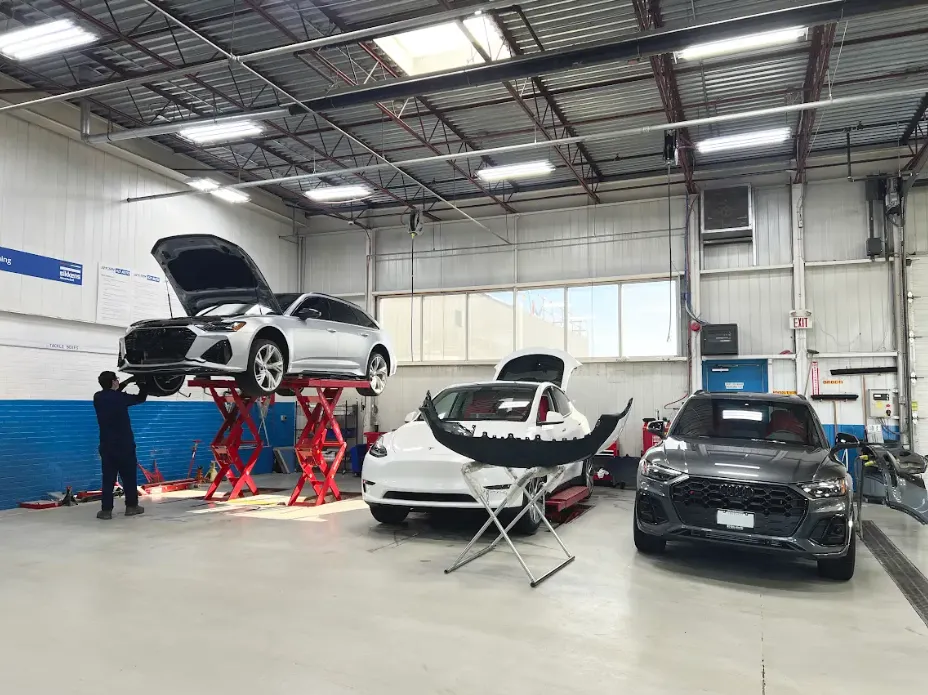


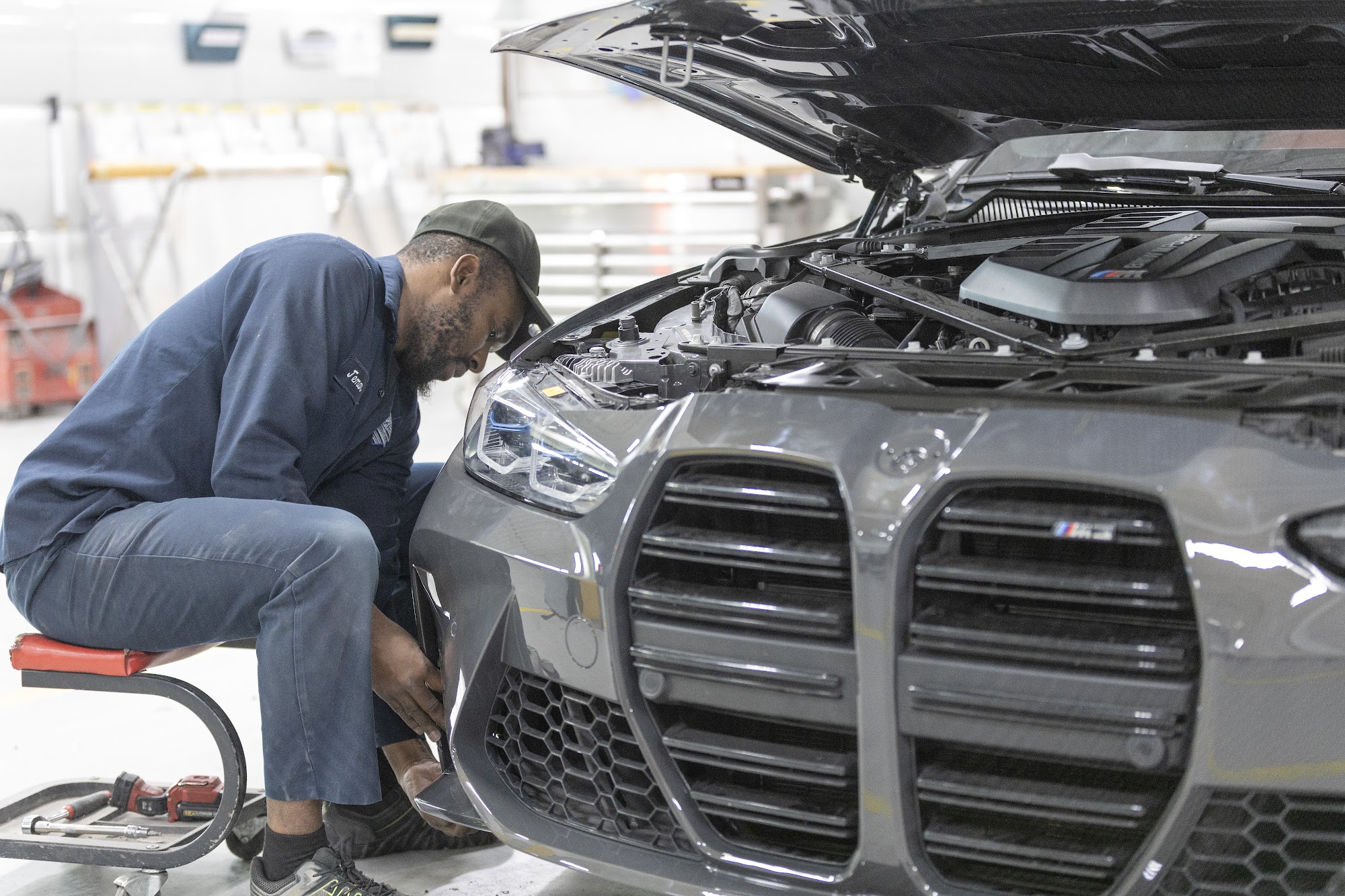
At a shop BMW has certified to repair its cars. In Toronto that means a BMW Certified Collision Repair Centre, and CSN 427 Auto Collision is one, working out of a 100,000 square foot facility at 395 Evans Avenue in Etobicoke. Below is what that certification requires, how dealer referrals work, what changes when a BMW goes somewhere without it and who decides where the car goes once a claim is open.
Most people ask this question at a bad moment. The car has been hit, an adjuster wants a shop name for the file, and the answer is due in about a minute.
What makes a body shop BMW certified?
Requirements BMW sets, then comes back to check. Technicians it trains and tests, equipment built to its specification, the repair procedures its engineers publish model by model, and genuine parts as the standard. We covered the full version in our piece on what BMW certification means for repairs, so this isn't the place to re-teach it.
What it looks like on the floor is more specific. Colour is matched through the BMW ColorSystem instead of by eye, a dual-chamber paint booth handles the refinishing, and glass work includes recalibrating the ADAS components built into newer BMW windshields. Our BMW certification page runs through the whole scope. What owners tend to care about later is the paperwork. Only a BMW Certified Collision Repair Centre can issue a BMW-approved Certificate of Repair, which states the car went back together to BMW's original factory safety specifications using Original BMW Parts.
How do dealer recommendations work?
A dealership has its name on that car long after the sale, so it is careful about who does the body work. Referrals go to shops it already deals with weekly, where parts, approvals and paperwork move between two teams who know each other's process.
BMW Toronto and BMW Etobicoke are both on our dealership partners list. In practice that means genuine BMW parts come through an established pipeline, and the finished repair is documented well enough that a dealer taking the car on trade knows exactly what was done to it. Sequencing is where that pays off. In the first week after a collision the teardown, the parts order and the insurer's approval all have to happen in the right order, and a shop your dealer already works with isn't starting from scratch.
What happens if you skip the certified shop?
Nothing you would notice in the first month. A capable general shop can make a BMW look finished. The difference sits under the paint. BMW builds with aluminum, high-strength steel and carbon-fibre-reinforced plastic, and the factory procedures say where a structural section may be cut, which fasteners go where and how the driver-assistance sensors are recalibrated once everything is back together. We wrote about that side of the work in repairing carbon fibre and high-strength steel. A shop without those procedures is working from general practice on a car that isn't general.
Parts work the same way. Certification requires genuine BMW parts, built to the tolerances the factory used, so body lines line up and the electronics talk to each other properly. Aftermarket becomes an option outside a certified shop, and fit and corrosion protection vary with it. Then there is what the file says three years later. A repair documented to manufacturer specification is worth something when you sell the car, and a repair nobody can account for is worth nothing.
Does your insurance company decide where the car goes?
No. In Ontario the choice of repair facility is yours. An adjuster can recommend a shop and most of them will, usually one inside the insurer's preferred network, and that recommendation is the whole of their authority. Tell them the BMW is coming to CSN 427 and ask them to note it on the file. We took that question on separately in our post on whether your insurer can choose your body shop in Ontario.
Our estimators have years of work with adjusters behind them, so the estimate, the supplement for damage nobody could see until the panels came off and the approvals all move between us and your insurer rather than through you. On turnaround we won't print a number in a blog post. What a BMW takes depends on what the teardown finds and how fast its parts arrive, and you'll get a firm date from an estimator standing beside the car.
Questions we hear a lot
Do you only handle major collision damage?
No. Paint refinishing, windshield and glass work with sensor recalibration, interior repairs, dent and scratch removal and wheel rim work all run through the same certified facility. A door ding on a 3 Series gets the same procedures and the same final inspection as a structural repair on an X5.
Do I have to go through the dealer to get here?
Not at all. Some owners arrive on a dealer referral and some book straight in, and the repair runs identically either way. Our partnership with BMW Toronto and BMW Etobicoke changes how the parts and paperwork move, and nothing else.
What should I bring to the estimate?
Your claim number and adjuster details if a claim is already open, the accident report if you filed one, any estimate you have already been given, plus vehicle ownership and proof of insurance. Our appointment checklist has the rest, and if something is missing, come anyway and we'll work around it.
If your BMW is sitting in a driveway with damage on it, whether that is a parking garage scrape or something that moved structure, book your estimate online or call the shop at 416-259-6344. Tell your insurer where the car is going, and we'll take it from the first assessment through to the final inspection.
This article is general information, not insurance advice. For what your policy covers and how your claim gets handled, confirm the specifics with your licensed broker or insurer.