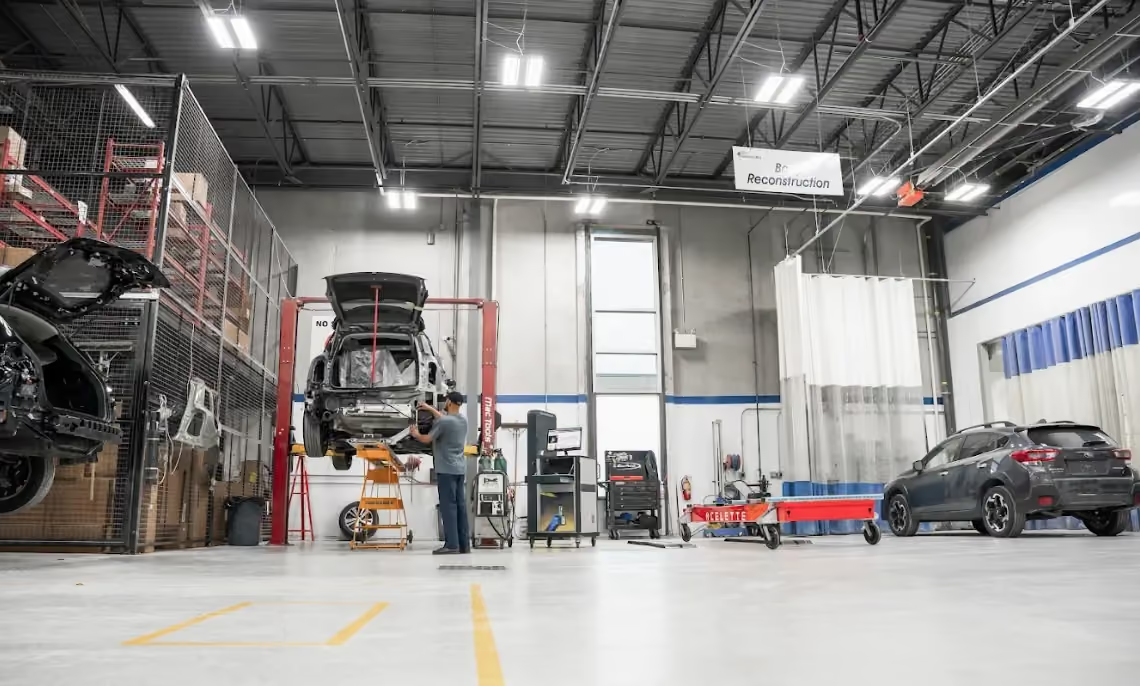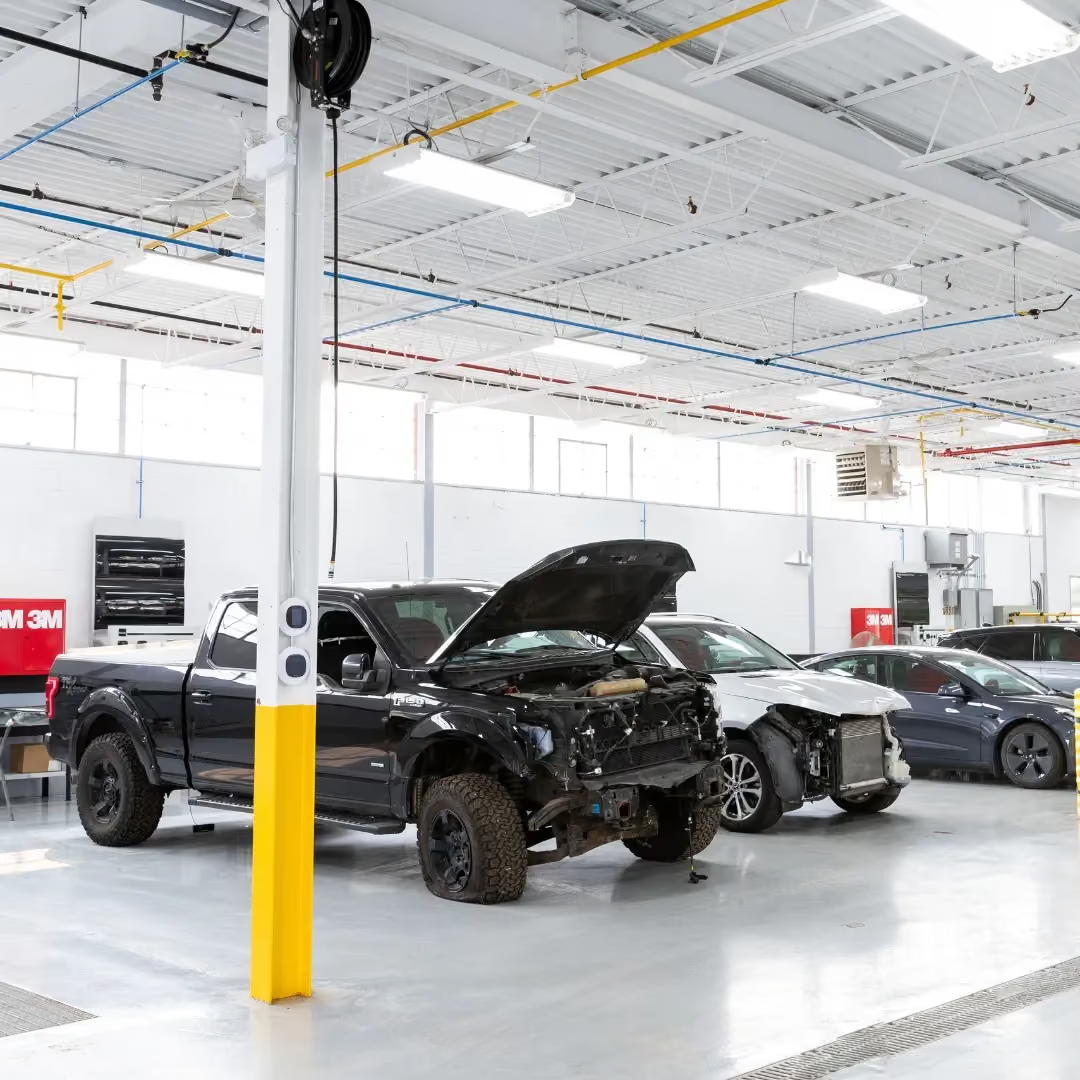


CSN 427 Auto Collision runs a dedicated truck and van collision repair shop at our Etobicoke facility: 13,000 square feet set up for mid-sized trucks, Sprinters, cube vans and the other working vehicles a standard collision bay can't take. It sits inside our 100,000 square foot repair centre at 395 Evans Avenue and runs on Symach equipment sized for larger bodies. If you drive a truck or van for work anywhere in Toronto or the GTA, this is the part of the building that exists for you.
We announced the truck facility in a short post when it opened in late 2024, and it has been working ever since. This is the longer tour: what a dedicated truck space changes, how Sprinter and commercial van repairs run through it, how fleet coordination works, and what to expect from insurance when the damaged vehicle is also how you make your living.
Why does a truck need its own shop?
Size, mostly. A Sprinter can run past ten feet tall, and extended vans stretch over twenty feet long. Most collision equipment is sized for passenger cars, because passenger cars are most of the work. Put a high-roof van in a booth designed around a sedan and you can't light it properly, you may not even close the door behind it, and the finish will show it.
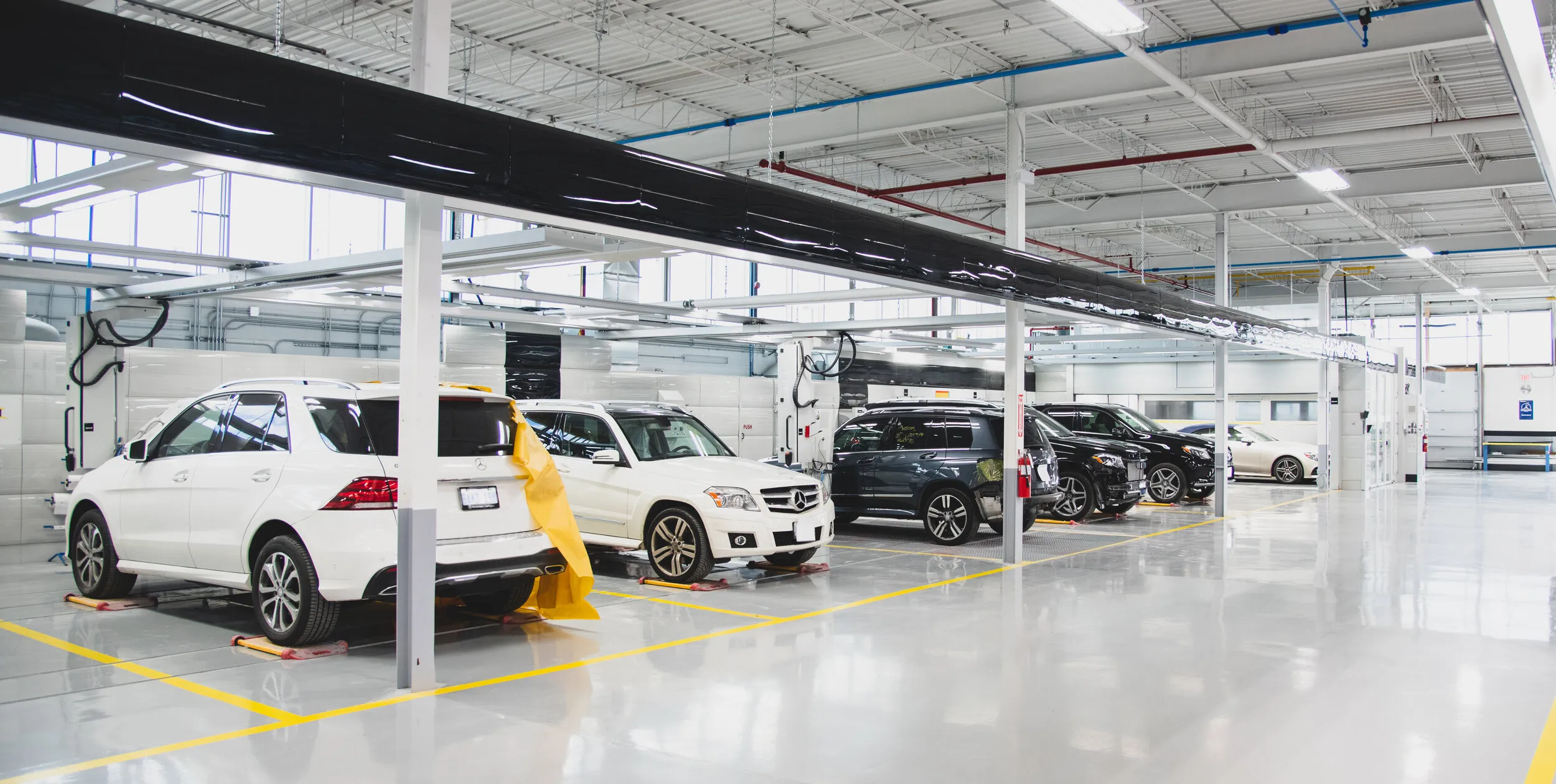
So the truck side got its own equipment. Our paint line includes six downdraft spray booths and a Symach KombiTron dual chamber booth, and, built specifically for larger vehicles, two Symach custom-sized spray booths with extra height and length for trucks and light-duty vehicles. Extra booth volume sounds mundane until the day you need it. A booth that closes around the whole vehicle gives you one continuous refinish under controlled airflow, which is how a van gets the same quality of paint a coupe does. Colour matching runs through an AkzoNobel Automatchic tool, and on fleet vehicles that matters twice, because the new paint has to match the panel beside it and the van parked next to it wearing the same livery.
The Symach equipment was chosen for speed as much as quality. It was developed for mid-sized trucks and vans specifically, and it cuts repair time, which on a vehicle that bills by the day is the entire point. The same thinking runs through the smaller details, like a brightly lit workspace and eighteen prep stations, so vehicles keep moving between stages instead of waiting for a bay to clear.
Structural equipment is the other half. Across the wider facility we run twelve Car-O-Liner frame machines, two Celette universal bench systems and a Car-O-Tronic measuring system with vision software, plus six vehicle scanning systems for diagnostics and calibration; the full list is on our facility page. It's the same building that has been named North American Body Shop of the Year three times, and the truck shop draws on all of it. Larger vehicles are built differently than cars, from body-on-frame trucks to unibody vans with reinforced subframes, and those differences change how you measure, pull and weld. We went deep on that in our piece on heavy-truck and van repair, so we won't re-teach it here.
Equipment only matters in trained hands. The facility was the first I-CAR Gold Class shop in Canada back in 2015, and the technicians doing structural work are factory certified on aluminum and high-strength steel. On trucks and vans, where panel materials change from model to model, that training decides whether the repair plan is right the first time.
What about Sprinters and commercial vans?
Mercedes-Benz vans are a specialty here, and that's a deliberate investment. We're one of only three Mercedes-Benz certified collision centres in Toronto. For a van owner, the practical value of that certification is parts and training. Genuine Mercedes-Benz parts are only available through certified centres, our technicians train directly with Mercedes-Benz, and the parts and materials that go on carry a factory warranty. On a Sprinter that works every day, all of that shows up in how the vehicle drives afterward and what it's worth when you eventually sell it.
Commercial vans also rarely arrive empty. Shelving, partitions, refrigeration units, wiring for a mobile trade, racking installed by an upfitter. Damage to the shell often means damage to what's mounted on it, so our estimate conversation covers the cargo area as carefully as the sheet metal, and where a third-party upfitter built the interior, the repair plan has to account for their work too.
Newer vans also carry much of the same driver-assistance hardware as passenger cars, and cameras and sensors don't forgive guesswork. After glass or front-end work, those systems get recalibrated and inspected before the vehicle goes back on a route, because a lane camera that's a degree off is a problem you want caught in the shop, never on the Gardiner. And because most of these vans are somebody's livelihood, the van side of the operation is set up to keep repairs moving without cutting corners on parts or paint.
Who uses the truck shop?
The mix is wider than people expect. Delivery vans and last-mile trucks come through, Amazon vehicles included. Trades vans carrying a plumbing, electrical or HVAC business in the back. Cube vans and light-duty trucks owned by companies with three vehicles and nobody whose job title says fleet manager. And personal pickups that spend the week on job sites and the weekend towing something north on the 400. We're a family-run shop with more than fifty years of collision repair behind us, and the truck space was added because these customers kept arriving at a building originally organized around cars. Vehicles come in from across Toronto and the GTA, and Saturday morning hours help when a van can't come off its weekday route.
Fleet work adds a coordination layer that ordinary repair doesn't have. If you run several vehicles, talk to us about sequence before you book, because we'd rather repair two vans a week apart than have both parked in our lot while your routes go uncovered. We're open 7:30 am to 5:30 pm on weekdays and Saturday mornings from 9 to 1, and if a damaged vehicle can't move under its own power, our roadside towing line runs around the clock across the GTA.
Late summer and early fall are peak season for many of the businesses these vehicles serve, and a van that sits an extra week in August costs its owner in a way a family sedan doesn't. Minimizing downtime for working vehicles is the reason the dedicated space exists, and it drives how we schedule, estimate and order parts on the truck side.
What happens with insurance when a work vehicle is hit?
The claim itself runs like any collision claim, with more pressure on the clock. We've spent over five decades working alongside the major insurance companies, and our estimators have years of experience with adjusters. Repairs start with disassembly so hidden damage gets found at the estimate stage instead of surfacing mid-repair and stretching your downtime. Whether the job runs through an insurance claim or private pay, the estimate gets built the same way.
One question comes up constantly with work vehicles: who decides where the repair happens? We took that question on separately in our post on whether your insurer can choose your body shop in Ontario, and it's worth reading before you're standing at a tow yard making a fast decision.
A little preparation shortens the whole process. When you call, have the basics ready: where the vehicle is now, whether it drives, photos of the damage, and your claim number if one has been opened. If the vehicle carries an upfit, mention that on the first call too, because it changes the parts conversation. None of it is complicated, and it lets the estimate start moving before the vehicle even arrives.
On turnaround, we won't print a promise in a blog post. Honest timelines come out of the teardown and the parts availability on your specific vehicle, and we'd rather hand you a firm date at the estimate than a marketing number here. What we control is the setup around the repair, meaning a space your van fits in, equipment built for it, and technicians who work on these vehicles every week.
Questions we hear a lot
Do you only repair commercial trucks and vans?
No. Personal pickups and vans go through the same space on the same equipment. We hold Ford F-150 certification, and the facility has factory-trained aluminum technicians and a self-contained aluminum repair area, which matters on aluminum-bodied pickups.
How big a vehicle can the truck shop take?
It was built for mid-sized trucks and vans, which covers Sprinters and other high-roof vans, cube vans, pickups and light-duty commercial trucks. The two custom-sized booths were built with extra height and length for exactly this range. If you're not sure your vehicle qualifies, call 416-259-6344 and describe it, and we'll give you a straight answer before you arrange a tow.
Is it bodywork only, or the mechanical side too?
Both, in the same space. The truck facility handles collision repair, mechanical work and custom enhancements under one roof, and the facility's six scanning systems cover the diagnostics and calibration that follow collision damage on newer vehicles.
If a truck or van you rely on needs repair, book an estimate online or call 416-259-6344 and tell us what you're driving. The truck shop exists so working vehicles in the GTA don't wait behind a line of sedans, and the fastest way to cut your downtime is getting the vehicle in front of an estimator this week.
This article is general information, not insurance advice. For what your policy covers on a commercial vehicle claim, confirm the specifics with your licensed broker or insurer.