

Porsche has long been revered for creating vehicles that deliver exhilarating performance, precise handling and distinctive design. Models like the 911, Cayman and Taycan push the boundaries of what is possible in sports and electric vehicles. Achieving this performance involves using advanced materials such as aluminium, magnesium and carbon‑fibre reinforced plastic. When a Porsche is involved in a collision, the repair process must preserve the delicate balance between weight, rigidity and safety that defines the brand. This requires a deep understanding of composite materials and the techniques used to restore them.
Carbon fibre is one of the most prominent materials in modern Porsche construction. This composite consists of strands of carbon woven together and embedded in a resin matrix. It offers exceptional strength‑to‑weight ratio, making it ideal for components like roofs, hoods and structural reinforcement. However, carbon fibre behaves differently from metals when damaged. A visible scratch may only affect the clear coat, but an impact that appears minor could cause fibre delamination beneath the surface. Technicians must use specialized tools and nondestructive testing methods, such as ultrasonic scanning or thermography, to determine the extent of the damage.
Repairing carbon fibre involves several critical steps. First, damaged fibres are removed or sanded back to a sound substrate. New carbon‑fibre cloth is then carefully cut and layered to match the original weave direction and orientation. The repair area is impregnated with epoxy resin, vacuum‑bagged to remove air pockets and cured at a controlled temperature. The curing process may require the use of a heated press or oven to ensure that the resin reaches the necessary hardness. After curing, the surface is sanded and prepared for refinishing. A clear coat or paint is applied to protect the fibres from ultraviolet light and environmental exposure.
Aluminium is another key material in Porsche construction, particularly in body panels and suspension components. Aluminium offers excellent corrosion resistance and weight savings, but it cannot be treated the same way as steel. Traditional welding can weaken aluminium’s microstructure, so bonding and riveting are common alternatives. When welding is necessary, technicians use pulse MIG or TIG welding equipment with precise heat control. Repairing aluminium often requires replacing entire panels rather than patching, especially when the damage is near structural joints.
Magnesium, while less common, appears in certain Porsche engine components and interior structures. Magnesium is extremely light but also prone to corrosion if not handled properly. Repairs to magnesium components usually involve replacement, as welding magnesium can be hazardous due to its flammability. When used, coatings and protective treatments are applied meticulously to prevent corrosion.
Composite materials extend beyond carbon fibre. Glass fibre reinforced plastic (GFRP) appears in some internal panels and bumper reinforcements. While GFRP is more forgiving than carbon fibre, repairs still require careful sanding and layering with resin‑soaked glass cloth. Each layer must cure properly to regain strength. The finished repair is then refinished to match the surrounding surfaces.
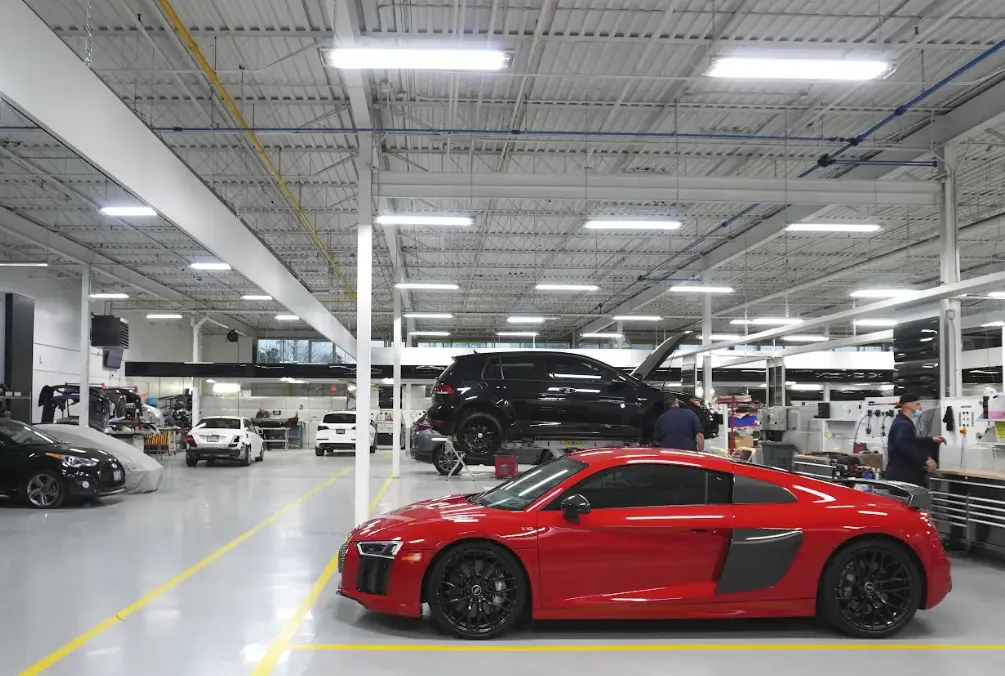
Sophisticated construction demands equally sophisticated repair environments. Porsche requires that certified repair facilities have designated areas for working on composites to prevent contamination from metal dust, which can interfere with bonding and cause corrosion. Tools used on steel or aluminium cannot be used on carbon fibre, and technicians must wear protective clothing to prevent resin contamination. Dust extraction systems are essential to maintain a clean workspace and to protect the respiratory health of technicians.
In addition to structural repairs, technicians must preserve the performance attributes that make Porsches special. Chassis geometry is critical for handling, so alignment and suspension adjustments must be precise. Electronic systems, including stability control and adaptive suspension, need to be recalibrated after repairs. Aerodynamics also play a significant role in performance. Body panels and aerodynamic elements like spoilers and diffusers must be installed accurately to ensure proper airflow. Even small deviations can affect high‑speed stability and cooling.
Interior elements in Porsches often include leather, Alcantara and carbon fibre trim. Repairing or replacing these materials requires a deft touch. Leather panels may need re‑stitched sections, while carbon‑fibre trim must be refinished without damaging the weave. Technicians working on these elements must match colours and textures to maintain the premium feel of the cabin. Because owners of high‑performance cars often have a keen eye for detail, the quality of interior repairs can significantly influence satisfaction with the overall repair.
The complexity of Porsche construction underscores the importance of training and adherence to manufacturer guidelines. Inadequate repairs can compromise safety, performance and resale value. A cracked carbon‑fibre roof repaired incorrectly could delaminate under stress. Misaligned body panels could disturb airflow, reducing high‑speed stability. Choosing a facility familiar with Porsche materials, equipped with the right tools and trained to follow prescribed procedures is essential for restoring these vehicles to their former glory after a collision.