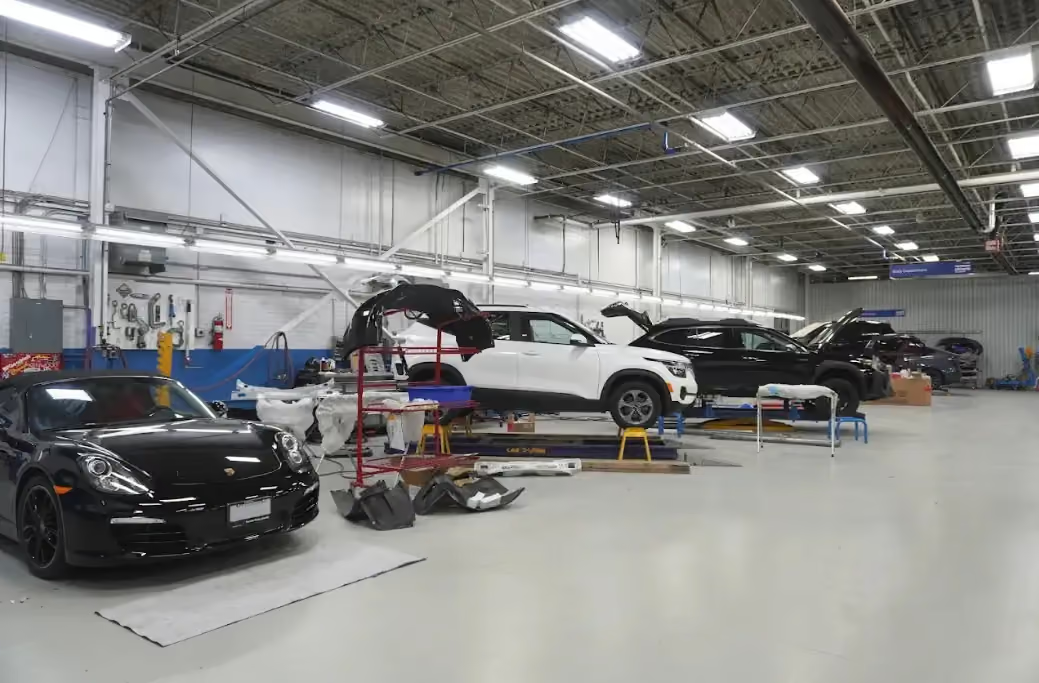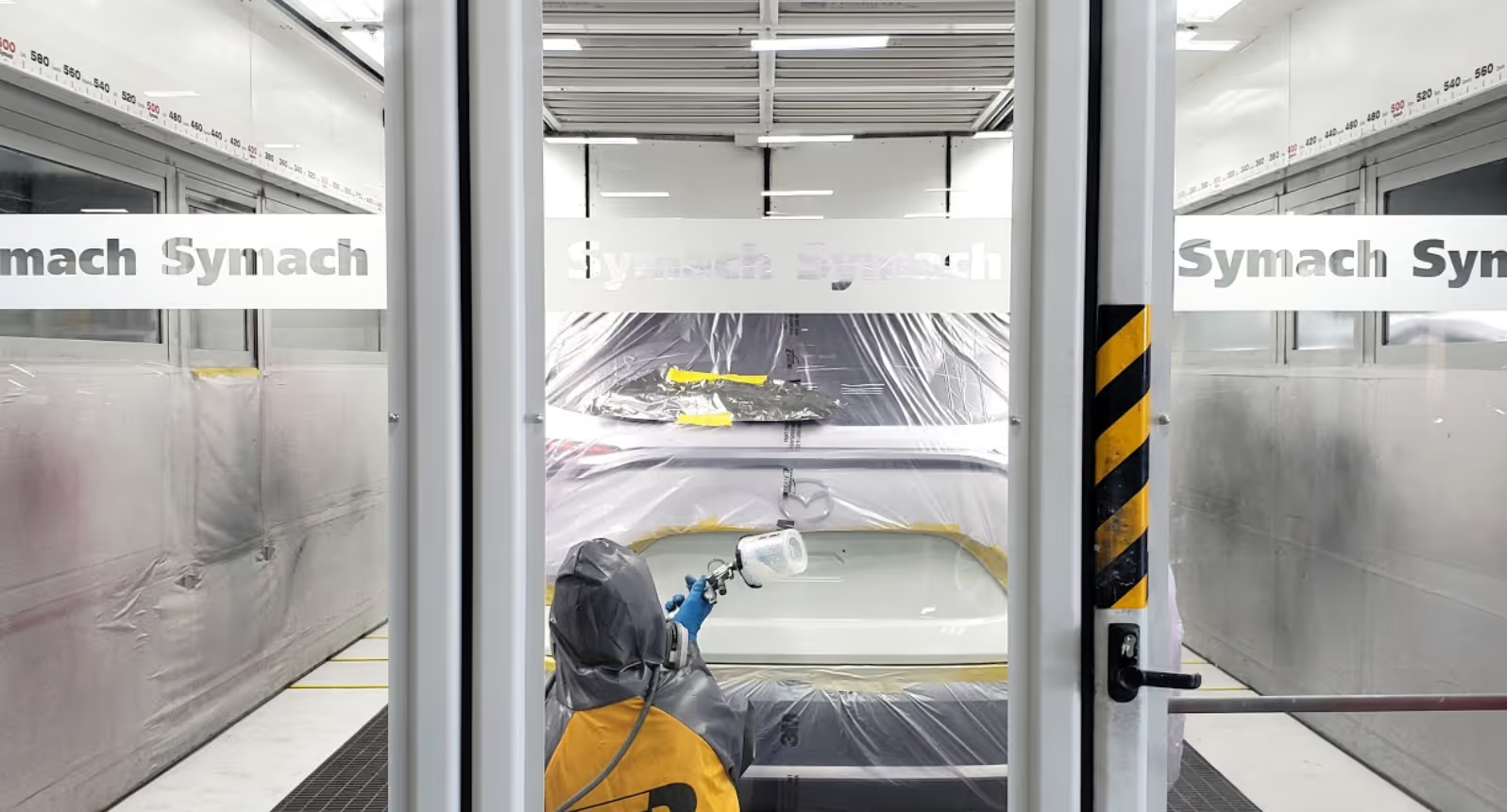


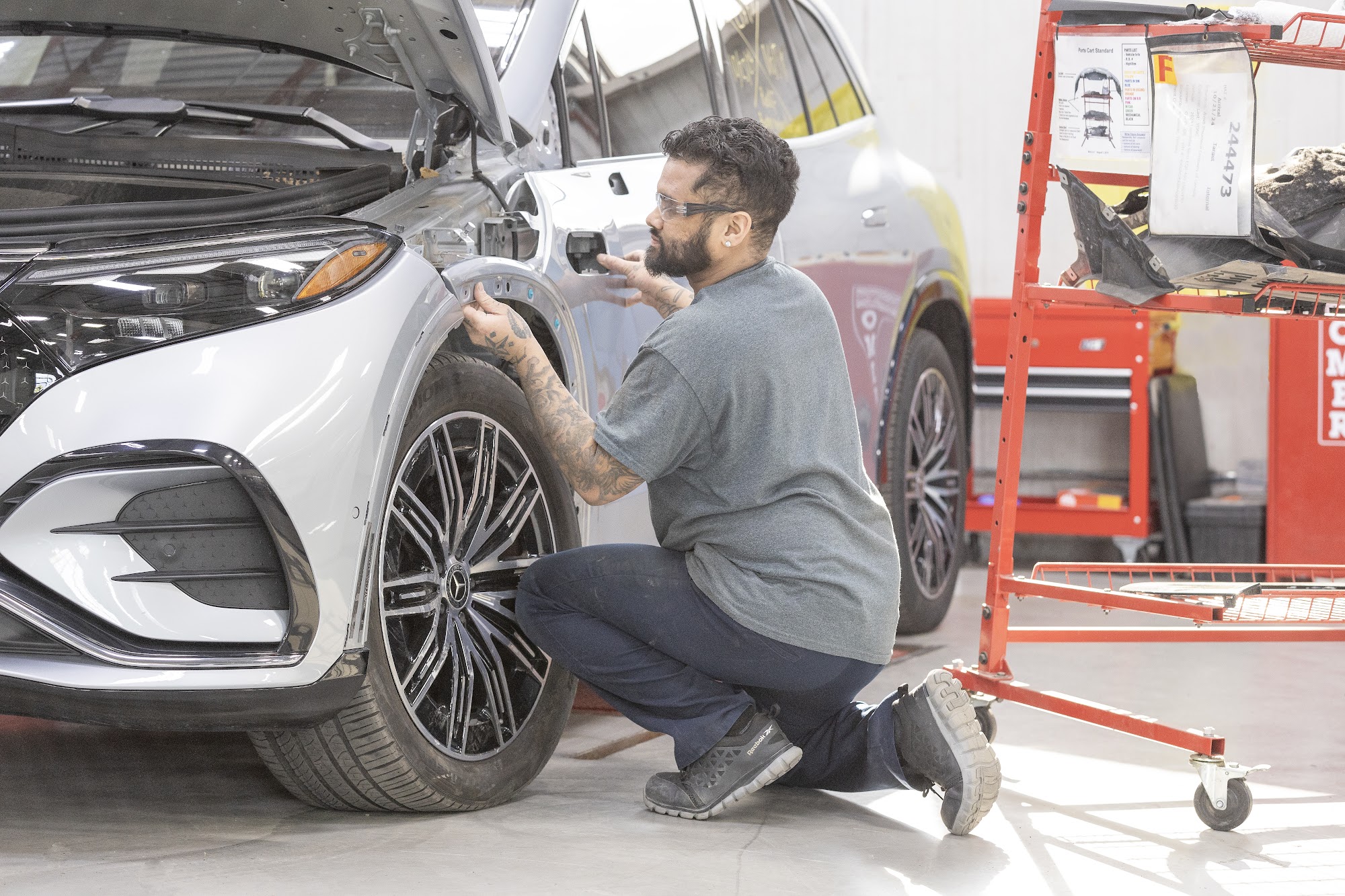
The question every shop hears first is when the car will be ready, and the honest answer up front is that it depends on more than the size of the dent. A collision repair moves through several stages, and a delay in any one of them moves the finish line. Knowing the stages makes the timeline a lot less mysterious, and it explains why two repairs that look similar can take very different amounts of time.
The stages a repair moves through
- Assessment. The visible damage is documented and an initial estimate is built.
- Disassembly. The damaged area comes apart, and the scope often changes here, because this is where damage that couldn't be seen from outside shows up.
- Supplement and approval. Hidden damage gets documented and added to the repair plan, which usually needs the insurer's approval before work continues.
- Parts. With the scope set and approved, parts are ordered.
- The repair itself. Structural and body work, refinishing in the paint booth, reassembly, and on modern cars the recalibration of any safety sensors the work affected.
- Quality check. The car is inspected against the repair plan before it's handed back.
Our process page walks through these stages in more detail.
Where the time usually goes
Two stages account for most of the waiting. The first is parts. If everything needed is in stock nearby, parts move fast. If a panel has to come from the manufacturer, or it's a less common model or an EV, that wait can stretch into the bigger part of the timeline, and it's largely outside the shop's control. The second is the supplement and approval cycle. When disassembly turns up hidden damage, the shop documents it and waits for the insurer to approve the additional work, and that back-and-forth adds days. Neither delay means the shop is sitting idle. It usually means the job is being done thoroughly rather than guessed at.
Following the manufacturer's procedures also takes the time it takes. A certified repair doesn't cut steps to hit a date, and on a luxury or structural repair that's the right call, because the alternative is a faster job that wasn't done properly.
What speeds things along
A few things genuinely help. The cleaner the information at the start, the faster the early stages move, which is part of why we use a pre-appointment checklist to get the right details and paperwork lined up before the car arrives. Responding quickly when your insurer needs something from you keeps the approval cycle short. And choosing a shop that communicates means you're not guessing, because a realistic timeline you can plan around beats an optimistic one that slips.
We can't promise a repair will be quick when parts or approvals say otherwise. What we can do is tell you honestly what your specific repair involves and roughly how long each stage should take. If you want a realistic timeline for your situation, talk to us and we'll walk you through it stage by stage, rather than giving you a number that sounds good and slips.